
When most people think about saving energy at home, they think about big, expensive projects: installing new windows, upgrading to solar panels, or buying a brand-new “smart” refrigerator.
While those projects certainly help, they aren’t realistic for someone trying to save money on a tight budget. If I’m being honest, the most significant impact on your monthly utility bill doesn’t come from your appliances, on the contrary, it more often that not comes from your daily habits.
The thing is, energy waste is often invisible. It’s the charger left plugged in for a week, the thermostat set two degrees too high, or the oven being preheated for thirty minutes, the hot water run too long while you’re in the shower. These “invisible drains” quietly add up to hundreds of dollars a year.
By adopting a few small energy-saving habits, you can tackle this waste at the source. Now, I’m not saying you have to live in a cold, dark house to see savings, no it’s not that bad. You just need to be more intentional about how your home uses resources.
Quick Answer: What are the most effective energy-saving habits?
Some of the most effective energy-saving habits are;
- Managing your thermostat by just 1-2 degrees
- Washing your laundry on the cold water setting
- Unplugging “vampire” electronics (phantom power) when they are not in use
- Running your hot water a little less when showering or doing the dishes
This is just a small list but they have significant impacts to your monthly bill.
Additionally, simple habits like using the microwave instead of the oven for small meals and cleaning your appliance filters regularly can significantly reduce your home’s baseload energy consumption and lower your monthly bills.
The thermostat is your biggest lever
Heating and cooling are the single largest energy expenses in almost every household. If you want to see a drop in your bill, the thermostat is where you start.
- The “1 Degree” Rule: Adjusting your thermostat by just one or two degrees (lower in winter, higher in summer) can save you up to 10% on your annual heating and cooling costs. You likely won’t even notice the temperature difference, but you will notice the savings.
- Natural Temperature Before you reach for the dial, use your curtains and blinds. In the winter, keep them open during the day to let the sun warm the room. In the summer, keep them closed during peak sun hours to block out the heat.
- Dress for the Season: It sounds simple, but wearing a sweater indoors during the winter instead of turning up the heat is one of the oldest and most effective energy-saving habits.
Managing “Phantom Power”
Did you know that many electronics continue to draw power even when they are turned off? This is known as “phantom power” or “vampire energy.”
Common culprits include:
- Phone and laptop chargers
- Coffee makers with digital clocks
- Game consoles in “standby” mode
- Televisions and sound systems
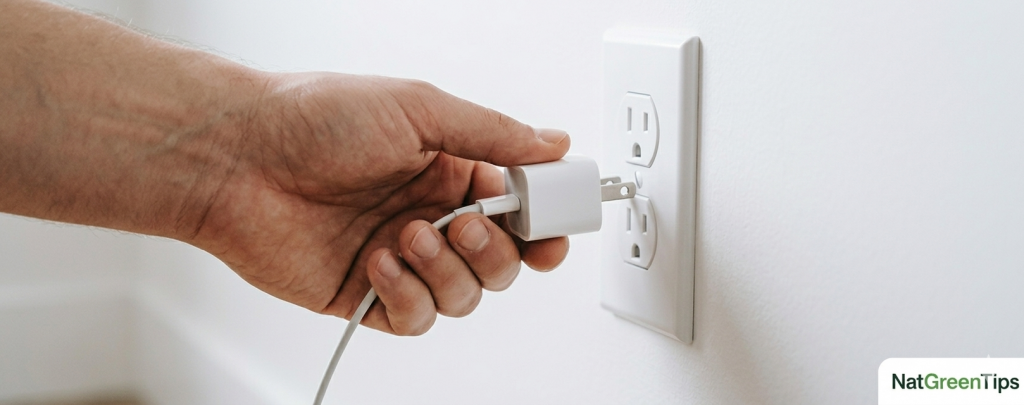
The easiest habit to build is simply unplugging devices when you aren’t using them. To make this easier, plug your home entertainment system or office desk into a power strip with an on/off switch. One click at night can kill the power to five different “vampire” devices instantly. Related reading: Simple green habits checklist
Efficiency in the kitchen
The kitchen is an energy-heavy room, but a few behavioral shifts can drastically reduce the cost of cooking.
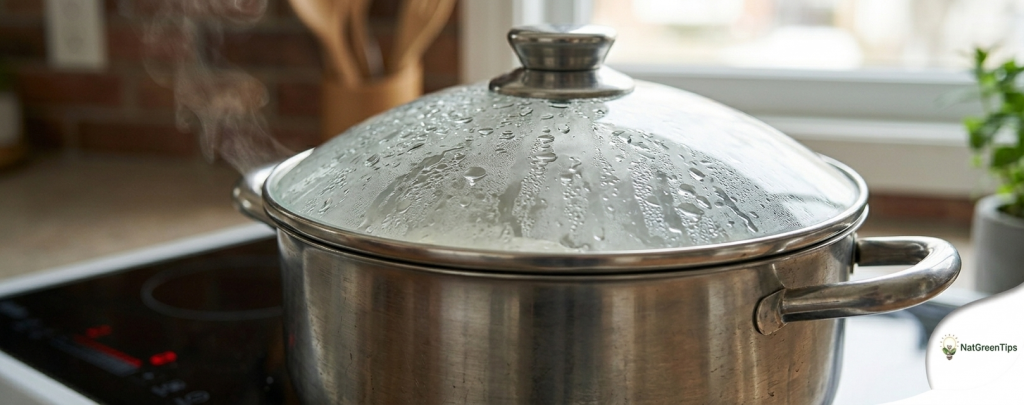
- Lids on Pots: Always use a lid when boiling water or cooking on the stove. It traps the heat, allowing the food to cook faster and using significantly less energy.
- Microwave vs. Oven: For reheating food or cooking small portions, the microwave is much more efficient than the oven. The oven takes a long time to preheat and heats up the entire kitchen, whereas the microwave targets only the food.
- Fridge and Freezer Maintenance: Make it a monthly habit to vacuum the coils at the back of your fridge and check the rubber seals on the doors. If the seals are loose, cold air escapes, forcing the machine to work twice as hard to stay cold. Related reading: Pantry and fridge organization tips.
Lighting and electronics
While LEDs have made lighting much cheaper, the “habit” of lighting still matters.
- The “Last One Out” Rule: Make it a household rule that the last person to leave a room turns off the lights. It’s a small action that, when repeated hundreds of times a month, makes a difference.
- Screen Brightness: If you work from home, lower the brightness on your monitors and set your computer to “sleep” after 5 minutes of inactivity.
- Clean the Bulbs: Dust on light bulbs can actually block a significant amount of light, leading you to turn on more lamps than you actually need. A quick wipe during your normal cleaning routine can help. Related reading: How to save money on laundry.
FAQ
Does unplugging chargers really make a difference?
On its own, one phone charger uses very little. But when you add up five chargers, a coffee maker, a microwave, and a TV, “vampire energy” can account for up to 5-10% of your total electricity bill.
Is it cheaper to leave the heat on all day?
Generally, no. It is almost always more efficient to turn the heat down when you are away or sleeping and then warm the house back up when you need it. A programmable thermostat can automate this for you.
How much can I save with these habits?
A household that strictly manages its thermostat, addresses phantom power, and practices efficient cooking can easily save $15-$40 per month on their electricity bill, depending on local rates and climate.
Conclusion
Energy-saving habits are about consistency rather than grand gestures. You don’t need to live in the dark or be uncomfortable to save money.
By focusing on the biggest levers, your thermostat and your kitchen routines and addressing the “invisible” drain of phantom power, you can systematically lower your utility bills. Start with one habit this week, like unplugging your chargers, and watch how easy it is to reclaim your household budget from energy waste.
—
Want more ways to lower your monthly expenses? Download our free green habits checklist for a step-by-step guide to saving energy and money every day.