
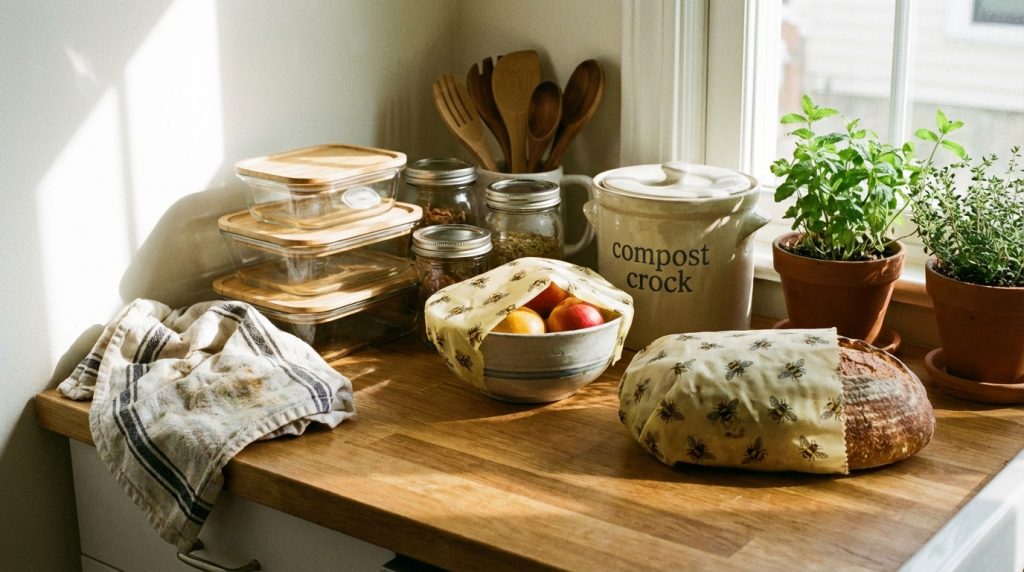
When we talk about reducing waste in the kitchen, we usually talk about our general habits, such as planning your meals, checking the fridge, or buying in bulk when we do our grocery shopping.
But as I’ve learned in my own home, the right habits are much easier to maintain when you have the right gear. You don’t need a kitchen full of expensive gadgets or high-end specialized tools. In fact, some of the most effective kitchen and grocery tools that reduce waste are simple, affordable, and incredibly practical.
The goal isn’t to buy your way into sustainability, rather, it’s to find the few specific tools that solve “friction points” in your routine, those moments when it’s easier to throw something away than it is to save it.
By investing in a few budget-friendly basics, you can make your grocery systems more efficient, extend the life of your food, and ultimately save a significant amount on your monthly budget.
Quick Answer: What are the best budget kitchen tools to reduce waste?
The best budget-friendly kitchen and grocery tools that reduce waste include high-quality glass food storage containers (to improve visibility and longevity), reusable mesh produce bags (to eliminate plastic rolls), silicone stretch lids (to replace plastic wrap), and a simple herb keeper (to keep greens fresh for weeks).
These tools are worth the investment because they directly prevent food from spoiling and eliminate the need for recurring disposable purchases like plastic wrap and bags.
Tools that extend food life
The biggest waste of money in any kitchen is produce that goes bad before you can eat it. These specific tools help prevent that by addressing the real causes of spoilage: humidity and oxygen.
- Herb Keepers: If you are tired of buying a bunch of cilantro only for it to turn into a sad, brown puddle in three days, a simple herb keeper is a must. These small containers hold a bit of water at the bottom to keep the stems hydrated while protecting the leaves from the direct cold of the fridge.
- Produce Savers: These are specialized storage bins with built-in humidity vents. They help keep vegetables like berries or leafy greens fresh for significantly longer than the plastic containers they come in.
- The Humble Glass Jar: Never underestimate the power of a simple glass jar. Storing items like carrots or celery in a jar of water in the fridge can keep them crunchy for weeks. Related reading: Pantry and fridge organization tips.
Grocery shopping “gear”
A low-waste grocery routine relies on having your gear ready before you reach the checkout line.
- Mesh Produce Bags: These are one of the most effective kitchen and grocery tools that reduce waste. They are lightweight, washable, and completely eliminate the need for those flimsy plastic tear-off bags in the produce section.
- Insulated Shopping Bags: If you have a long commute from the store, keeping perishables at the right temperature prevents them from starting to spoil before they even reach your fridge.
- Compact Foldable Bags: The best bag is the one you actually have with you. Keep a few tiny, foldable bags in your car or purse for those “quick stop” errands that usually result in a plastic bag purchase. Related reading: How to build a low-waste grocery routine.
Prep tools for bulk buying
If you want to save money by buying in bulk, you need the tools to manage that inventory at home.
- A Basic Kitchen Scale: This is an underrated tool for waste reduction. When you buy in bulk, it can be hard to judge portions. A scale helps you divide large purchases (like meat or grains) into exact meal-sized portions before you freeze or store them.
- Freezer-Safe Containers: Buying in bulk only works if you can store the extras safely. Invest in a set of uniform, stackable, freezer-safe containers so your freezer doesn’t become a “black hole” of mystery bags.
- Labeling Tools: You don’t need a fancy label maker. A roll of masking tape and a permanent marker are the most important tools in an organized kitchen. Labeling every container with the contents and the date prevents “mystery leftovers” that eventually get thrown away.
Maintenance tools
Keeping your reusables clean is the only way to make sure you keep using them.
- Bottle Brushes: If your reusable water bottles or jars are hard to clean, you’ll eventually stop using them. A good set of long-handled brushes makes maintenance easy.
- Countertop Compost Bins: If you want to start composting but are worried about the smell or the mess, a small, filtered countertop bin is the answer. It makes the habit of separating food scraps a natural part of your prep routine. Related reading: Reusable kitchen products that save money.
FAQ
Do I really need mesh produce bags?
Technically, no—you can put produce in the cart loose. But for smaller items like mushrooms, green beans, or bulk nuts, mesh bags are much more practical and prevent the need for plastic.
Is glass better than stainless steel for storage?
Glass is usually better for the fridge because it allows you to see the contents. If you can’t see the food, you’re more likely to forget it. Stainless steel is excellent for dry pantry storage or lunchboxes that might get dropped.
How do I keep my reusable bags clean?
Most mesh produce bags and canvas shopping bags can be thrown into the regular laundry with your towels. Make sure they are completely dry before you fold them and put them back in your car.
Our Conclusion
The best kitchen and grocery tools that reduce waste are the ones that make your sustainable habits easier to maintain. You don’t need to buy a whole new kitchen of “eco” gadgets, just focus on the few tools that you know address your biggest waste problems.
Whether it’s a simple herb keeper to stop wasting greens or a set of mesh bags to stop using plastic, these budget-friendly tools pay for themselves by reducing your grocery bill and eliminating the need for recurring disposable purchases. Start with one tool that solves your biggest kitchen headache, and build from there.
—
Ready to put your new tools to use? Read our full guide on How to build a low-waste grocery routine; and learn how to turn your kitchen gear into a money-saving system.