
For years I assumed “going solar” simply wasn’t an option for me. I rent, and rooftop panels were never going to happen without a landlord’s blessing and a five-figure budget. What changed my mind was a friend showing up to a weekend trip with a foldable solar panel charging her phone off her backpack. That sent me looking into budget solar gadgets for renters, and there’s a lot more out there than I expected.
Quick Answer
Renters and small-home owners can go partially solar without installation using portable solar panels, solar-powered phone chargers and power banks, solar security lights, and solar-powered attic or window fans. Most cost between $20 and $150 and require no wiring or permanent mounting.
Portable solar panels and power stations
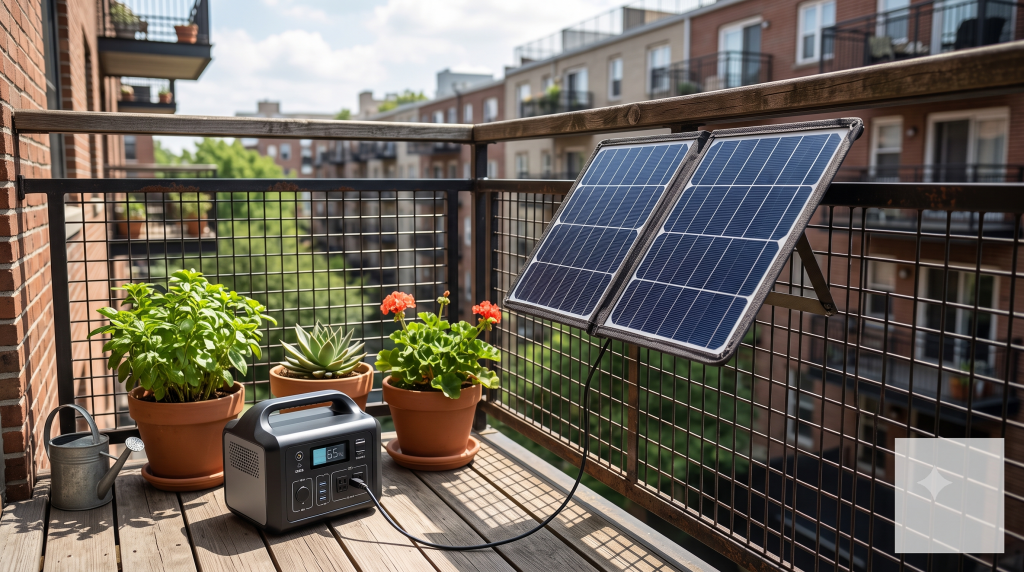
A foldable solar panel paired with a portable power station can charge phones, laptops, and small appliances. I keep mine propped against my balcony railing on sunny days. No wiring, no mounting, and it folds flat into a drawer when I’m not using it, which matters a lot since I move apartments fairly often.
It took me a bit of trial and error to find the right angle: flat against the railing barely charged anything, while propping it at roughly a 30-degree tilt toward the sun made a real difference. If you go this route, expect a short adjustment period before you’re getting the most out of it.
Solar phone chargers and power banks
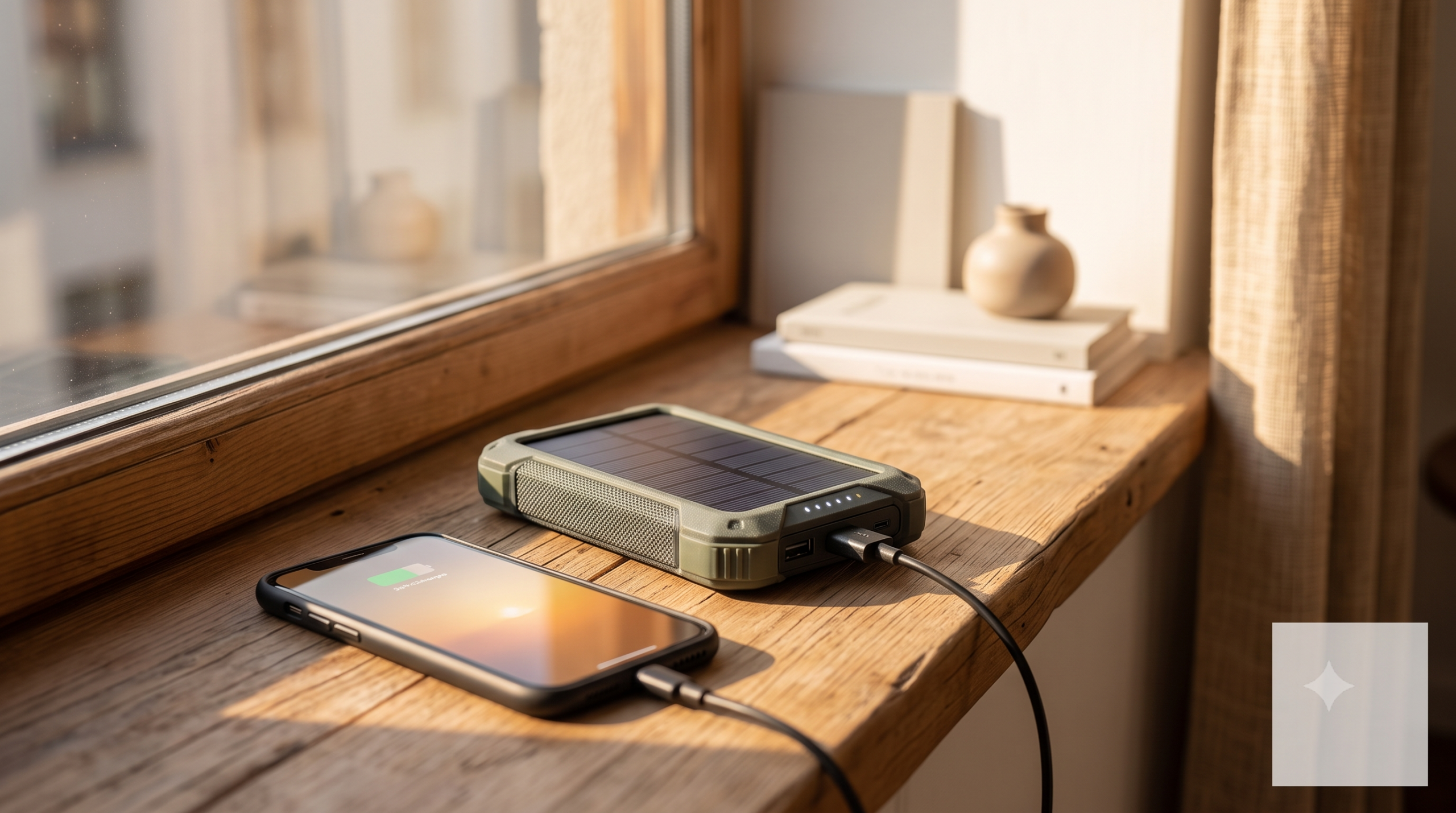
This was my actual entry point, and it’s the easiest one for anybody to try. I leave a small solar power bank charging on my windowsill and use it for daily phone charging instead of pulling from the wall outlet. It’s small, but it adds up over a year.
I went through two cheaper models before finding one that actually held a charge reliably. The lesson I took from that: don’t buy the absolute cheapest option here, since a lot of the bargain-bin ones have batteries that degrade fast.
Solar outdoor lighting
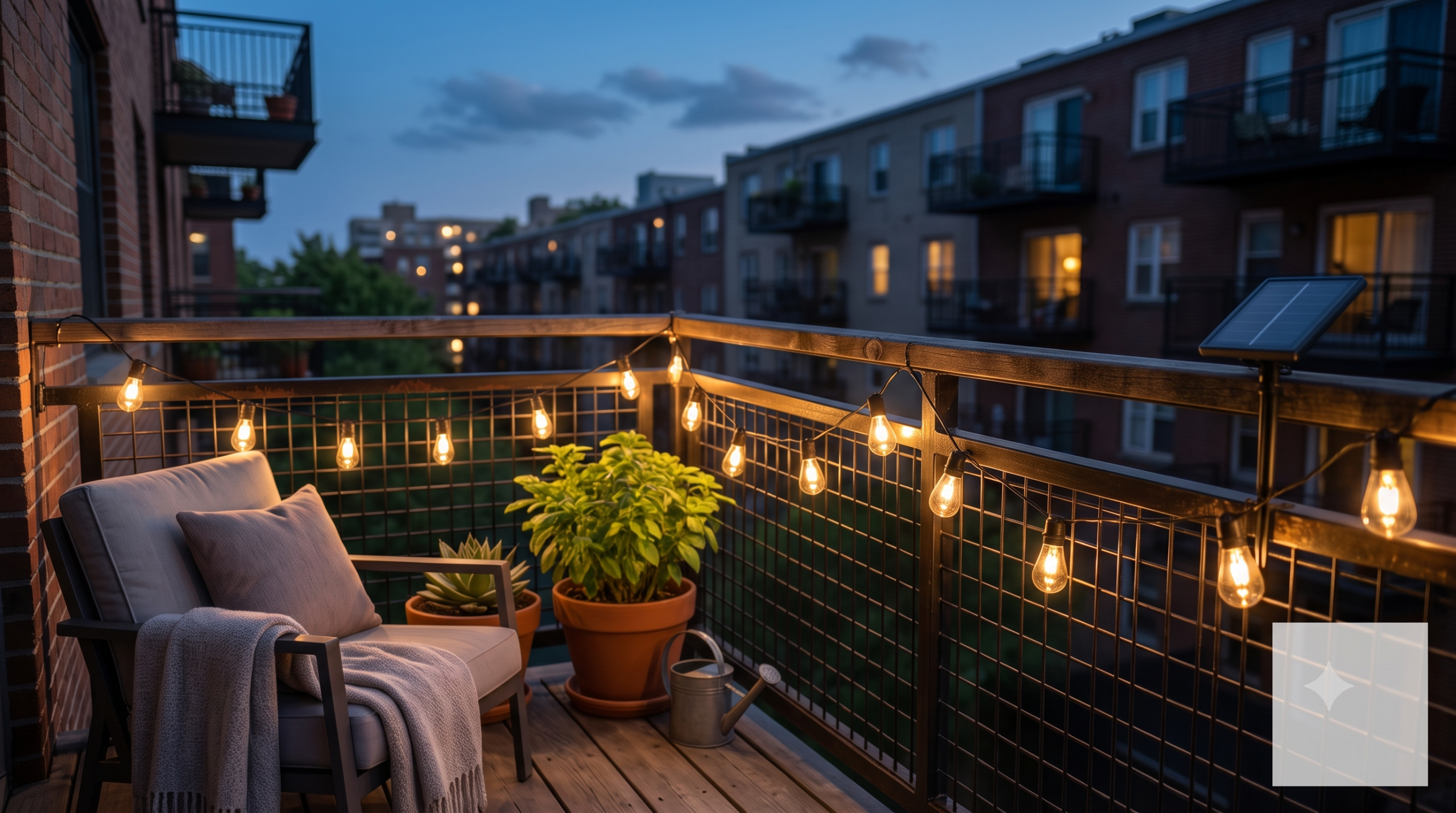
The string lights ended up being the most-used item on this whole list, honestly. They charge all day and turn on automatically at dusk, and I’ve never once had to think about them since installing.
- Solar path lights for balconies or patios, no wiring or outlet needed
- Solar security lights for entryways
- Solar string lights for outdoor gatherings (these were an easy, cheap upgrade for my balcony)
What to check before buying
Look at the battery capacity (mAh for chargers, watt-hours for power stations) relative to what you’re actually charging, and confirm the panel gets several hours of direct sun where you plan to place it. I learned this one the hard way: my first power bank sat in a shaded corner of my balcony for weeks before I figured out why it barely charged anything.
Check the return policy too, if the retailer offers one. Solar gadgets can be hit or miss depending on your specific sun exposure, and I’ve returned two items that just didn’t perform well in my particular spot, even though they had good reviews generally.
How I decide what’s worth buying versus skipping
My rule of thumb now: if a solar gadget replaces something I’d otherwise plug in daily (phone charging, outdoor lights on a timer), it’s usually worth it. If it’s something I’d rarely use anyway, the solar version isn’t solving a real problem, it’s just a novelty.
That filter kept me from buying a solar-powered gadget organizer I saw online that, in hindsight, I never would have used even if it were free.
What I’d add next
I’m eyeing a slightly larger portable power station next, mainly for the occasional power outage rather than daily use, enough to keep a router and a few devices running for a few hours. It’s a bigger investment than anything else on this list, so I’m taking my time comparing capacity and price before committing. If you’re curious what a step up in monitoring your actual usage looks like, that’s the same territory covered in our piece on whether home energy monitors are worth the money.
If you’re just starting out, though, I’d resist the urge to go big right away. Start with a phone charger or the string lights, see how much you actually use it, and build from there.
Comparing wattage without getting overwhelmed
When I first started reading spec sheets for these gadgets, the wattage and mAh numbers meant nothing to me. What helped was picking one reference point (my phone takes roughly 10-20 watt-hours for a full charge) and comparing every other spec back to that. A power bank rated at 10,000mAh roughly covers two to three phone charges, which was the number I actually needed to know to make a decision.
I’d suggest doing the same with whatever device matters most to you, rather than trying to understand every spec on the page. It made shopping for these gadgets far less intimidating once I had that one comparison point locked in.
Weather and seasonal performance notes
My setup performs noticeably differently across the year. Summer charging is fast and reliable, while in winter, shorter days and a lower sun angle mean everything takes longer to charge, even on clear days. I’ve adjusted my expectations accordingly rather than assuming something’s broken when winter charging is slower.
If you live somewhere with real winters, I’d factor that into your buying decision: a slightly larger panel or power bank than you think you need gives you a buffer for the months when the sun simply isn’t doing as much work.
The honest limitations worth knowing upfront
I want to be clear this isn’t a replacement for grid power in any meaningful sense. It’s a supplement for specific, smaller uses. I still charge my laptop from the wall most of the time, and I’d never rely on solar gadgets alone during an extended power outage without a much bigger, dedicated setup.
Going in with that framing kept me from feeling disappointed by what these gadgets can’t do, and let me appreciate what they actually do well: small, portable, no-installation savings on the things I use every day. It’s a similar honesty check to the one I went through weighing whether a smart thermostat actually saves money. Realistic expectations going in make the eventual verdict a lot more useful.
A realistic starter kit if you’re new to this
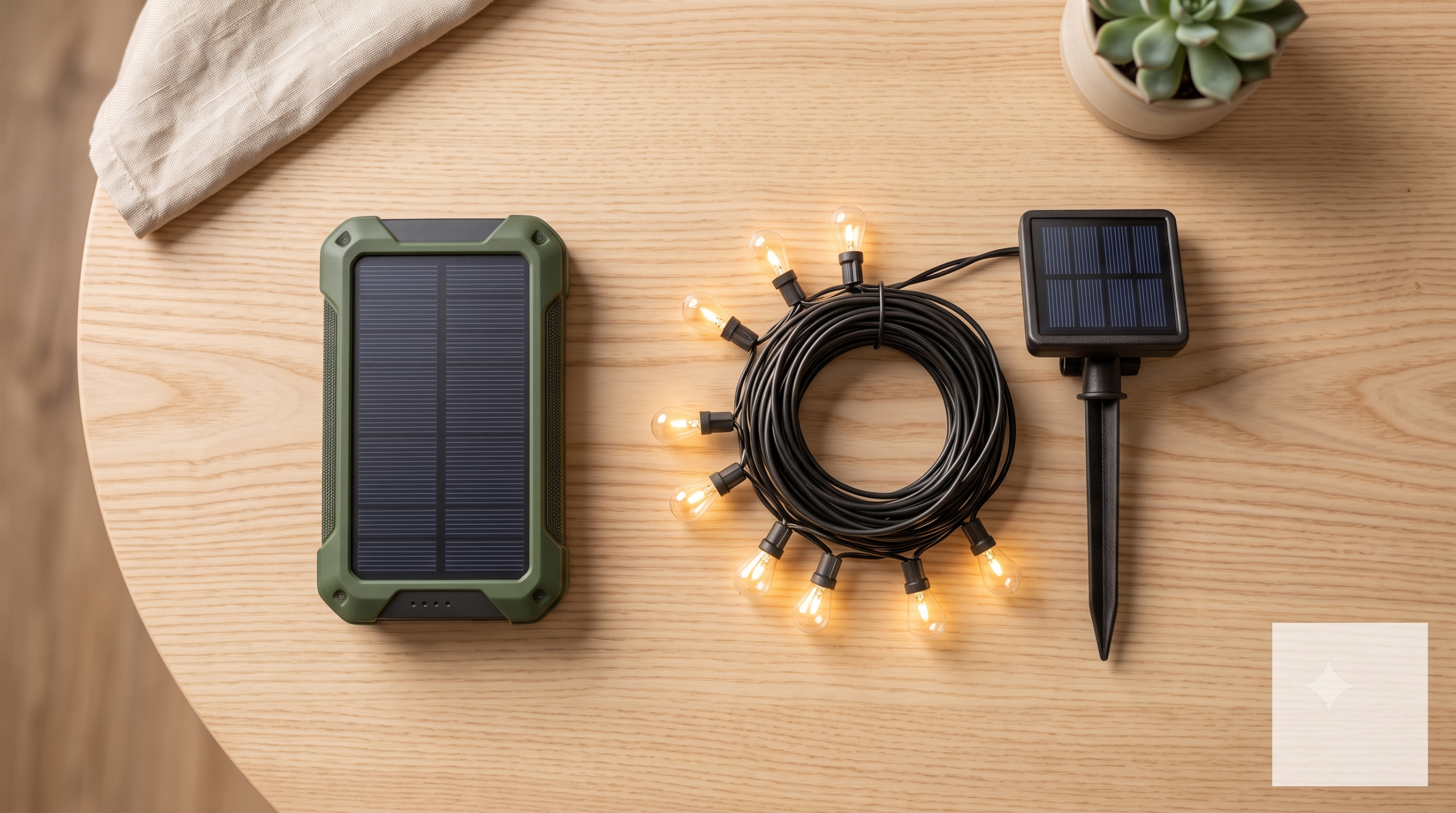
If I were advising a friend from scratch, I’d suggest starting with just two things: a solar power bank for daily phone charging and a set of solar string lights for outdoor space. Together those run under $60, need zero installation, and give you a real feel for whether solar gadgets fit your lifestyle before spending more.
Only after living with those for a month or two would I suggest deciding whether a bigger portable power station or additional lighting is worth the investment. That gradual approach is exactly how I built up my own setup, and it kept me from overspending on things I ended up not using much.
Frequently Asked Questions
🌿 Will this actually lower my electricity bill?
Small solar gadgets offset a modest amount of usage. That’s meaningful for phone charging and small devices, but they won’t replace grid power for major appliances. I think of mine as a nice bonus, not a bill-slasher.
🌿 Do these work in cloudy climates?
They’ll still charge, just more slowly. Look for models with a larger panel surface area if you live somewhere with less consistent sun.
🌿 Can I take these with me when I move?
Yes. That’s the main advantage over built-in solar, and honestly the reason I got into this in the first place. Everything here is portable and reusable in a new home.
🌿 Is it worth buying a cheap solar gadget just to try it out?
I’d set a low budget ($15-20) for your first try, expect it might not be perfect, and use what you learn about your own sun exposure before spending more.
🌿 How long do solar power banks typically last?
Mine has held up well after about a year and a half of regular use, though I’ve read the batteries in cheaper models tend to degrade faster after the two-year mark, another reason I’d avoid the absolute cheapest option.
Final NatGreen thoughts
You don’t need a roof or a landlord’s permission to start using solar power. A power bank and a set of string lights are a genuinely useful, no-installation way to try it. Start small, see what you actually use, and build from there.
Ready to try it? A solar power bank and a set of string lights together run under $60. That’s the whole starter kit, no wiring required.