

When I first started looking for ways to lower my household bills, I focused on the big things: adjusting the thermostat, unplugging electronics, or cutting back on subscriptions.
But if I’m being honest, one of the most consistent hidden costs in my home (and probably yours) was laundry. Between the electricity needed to heat water, the energy to run the dryer, and the constant repurchasing of detergent, the cost of keeping clothes clean adds up incredibly fast.
If you are trying to figure out how to save money on laundry, believe me when I say you do not need to make laundry day more stressful or start washing everything by hand. That is clearly asking too much for most of us!
You just need to adjust a few basic settings and build habits that make the machines work more efficiently. Simple, low-effort changes can lower your utility costs and extend the life of your clothes without turning a basic chore into a hassle.

Quick Answer: How do you save money on laundry?
To save money on laundry, switch your default washing machine setting to cold water, only run full loads, and air-dry items that dry quickly or are prone to shrinking.
Because heating water accounts for the vast majority of the energy used by a washing machine, switching to cold water is the single fastest way to reduce laundry costs in your household.
You don’t need to be perfect to see savings. Just focus on the small, repeated habits that reduce energy and detergent waste over time.
Why laundry costs more than you think
Laundry is a utility-heavy chore. It uses electricity, water, and expensive consumable products (like detergent and fabric softener) every single time you run a load.
The biggest expense usually isn’t the water itself—it is the energy required to heat that water. According to energy experts, up to 90% of the energy a washing machine uses goes entirely toward heating the water. The actual tumbling and spinning takes very little electricity by comparison.
Add in the high energy demand of a traditional dryer, plus the wear and tear that frequent heat exposure puts on your clothing (meaning you have to replace clothes faster), and it becomes clear why laundry habits matter to your budget. Related reading: Green habits that lower monthly bills.
Wash in cold water by default
If you want to know how to save money on laundry immediately, turn the temperature dial to cold.
Many of us grew up learning that hot water was necessary to get clothes truly clean. While that used to be true for older washing machines and legacy soap formulas, modern detergents are specifically designed to perform exceptionally well in cold water.
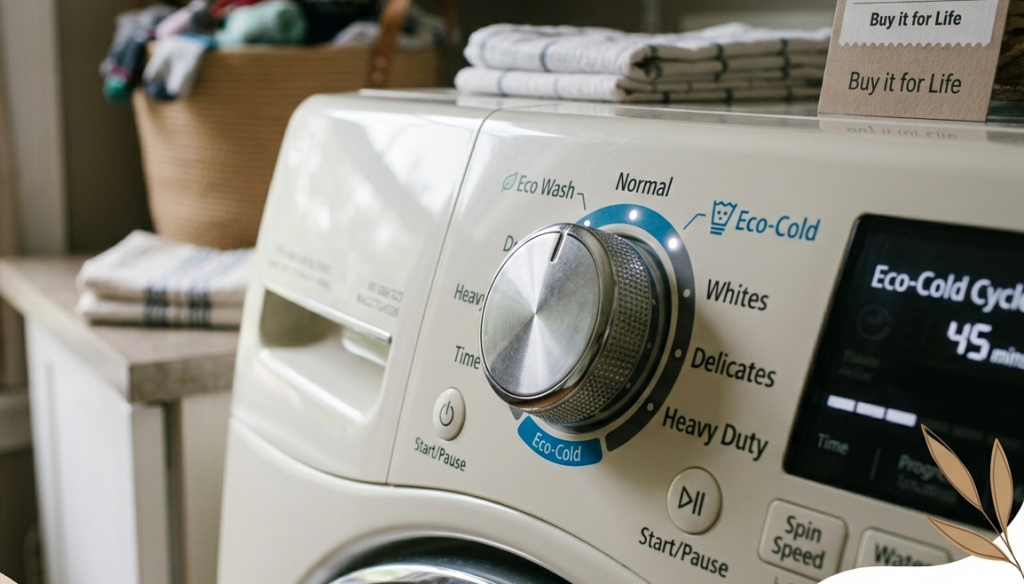
Unless you are dealing with severe oil stains, heavily soiled work gear, or sanitizing bedding after an illness, cold water is more than enough for everyday laundry.
Not only does this drastically reduce the energy cost of every load, but cold water is also much gentler on fabrics. It helps prevent colors from fading and keeps clothes from shrinking, which saves you money on wardrobe replacements over time.
Only run full loads
Washing a few items “just in case” you need them is one of the easiest ways to waste water and electricity. Your washing machine uses roughly the same amount of mechanical energy whether it is washing three shirts or thirty.
To maximize the efficiency of your water and electricity, make it a rule in your house to only run full loads.
If waiting for a full load feels difficult because you run out of specific items (like socks or workout gear), the easiest fix is usually a slight adjustment to how you sort. Instead of doing multiple highly specific small loads, try combining similar items and washing them together on a cold, gentle cycle.
Air-dry the easiest items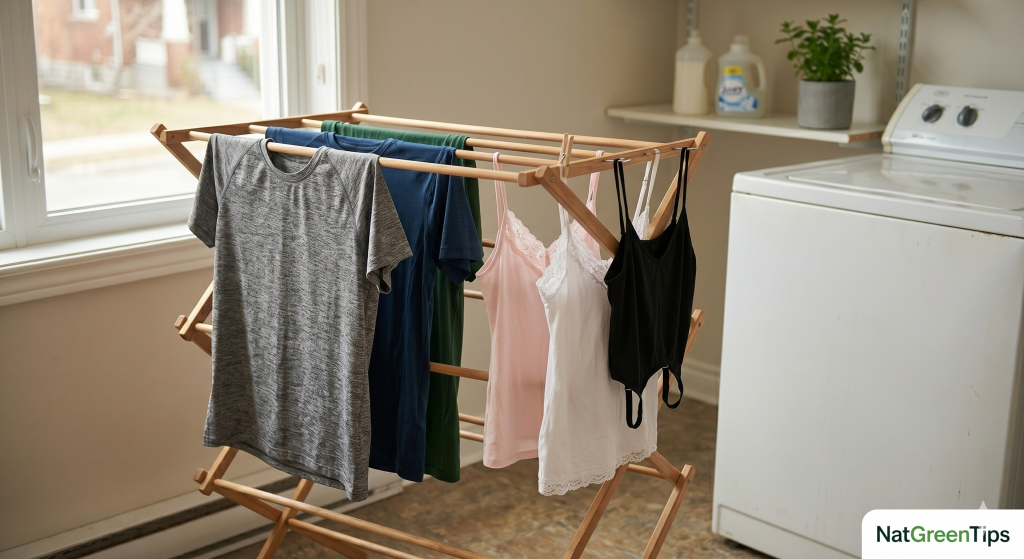
The dryer is one of the most energy-hungry appliances in an average home. You do not have to commit to air-drying every single towel and bedsheet to see savings, but pulling out the easiest items makes a noticeable difference.
Get in the habit of air-drying:
- delicate items
- synthetic activewear (which dries very fast anyway)
- jeans and heavier garments prone to shrinking
- items that are only slightly damp
A simple, inexpensive wooden or metal folding drying rack can easily pay for itself in a few months through reduced electricity use. Plus, keeping heat away from elastic and delicate fibers means your clothes will last significantly longer.
Use the right amount of detergent
More detergent does not equal cleaner clothes. In fact, using too much detergent can actually trap dirt and odor-causing bacteria in the fabric because the machine cannot rinse it all away.
Detergent companies often make the measuring cups confusingly large, leading us to use double or triple the amount of soap actually needed for a normal load. Believe me, I used to fill that cup to the brim thinking it would make things cleaner!
Check the actual lines on the measuring cap, and try using the minimum recommended amount for a few loads. You will likely find that your clothes come out just as clean, but your bottle of detergent lasts twice as long. This is one of the most direct ways to reduce the recurring cost of laundry products.
Related reading: sustainable living on a budget for beginners.
Maintain your machines for better efficiency
An inefficient machine costs more to run. Simple maintenance prevents your washer and dryer from working harder than they need to.
The most important habit is cleaning the dryer lint filter before every single load. A clogged filter restricts airflow, forcing the dryer to run longer and use more electricity to dry the same amount of clothes.
For your washing machine, check the rubber seals for buildup and occasionally run a cleaning cycle (or a hot water cycle with white vinegar) to keep the sensors and drains clear. Preventing a costly repair bill is one of the best ways to keep your laundry budget low.
Easy laundry-saving habits to start this week
If you want to start lowering your laundry costs right away, focus on these simple steps:
1. switch your washing machine to the cold water setting
2. check the detergent cap and only use the minimum required line
3. wait until the hamper is completely full before starting a load
4. pull out workout gear and delicates to air-dry on a rack
5. clean the dryer lint trap before pressing start
FAQ
Does washing in cold water actually clean clothes?
Yes. Modern washing machines and liquid detergents are specifically formulated to break down dirt and remove stains effectively in cold water. Hot water is usually only necessary for heavy grease or sanitizing.
Is air-drying indoors bad for humidity?
If you air-dry a massive amount of thick laundry in a small, closed room, it can increase humidity. However, air-drying a few synthetic items or delicates on a rack in a well-ventilated space will not cause issues.
Should I use dryer balls?
Wool dryer balls are a great investment. They help separate clothes as they tumble, which improves airflow and can significantly reduce the amount of time (and energy) the dryer needs to run.
How much can I really save on laundry?
Switching to cold water alone can save a household a noticeable amount on their annual water-heating bill. When combined with air-drying and using less detergent, the savings compound to make laundry a much cheaper chore.
NatGreenTips’ Final thoughts
Learning how to save money on laundry does not mean you have to sacrifice convenience or spend hours hanging wet clothes.
The biggest savings come from the easiest changes: turning the dial to cold, waiting for a full load, and using the correct amount of soap. By focusing on efficiency rather than perfection, you can keep your clothes looking great while keeping your utility bills under control.
—
Want more realistic ways to lower your household bills while living greener? Join our newsletter for practical, budget-friendly tips that fit real life.