
If I’m being completely honest, throwing away slimy greens from the bottom of the crisper drawer used to be a weekly routine in my household. I would buy groceries with the best intentions, but by the time Thursday rolled around, half of what I bought was either forgotten or pushed so far back in the fridge that it was no longer edible.
It is incredibly frustrating to throw perfectly good food (and money) into the trash. But the reality is that bad organization is usually the culprit, not laziness.
If you are tired of wasting food and overspending on your grocery budget, you don’t need to completely remodel your kitchen. You just need a few practical pantry and fridge organization tips that actually make sense for the way you live. The goal isn’t to make your fridge look like a perfectly color-coded magazine cover. The goal is to organize your food so you actually eat it before it spoils.
Quick Answer: How do you organize a fridge and pantry to reduce food waste?
To organize your fridge and pantry to reduce food waste, keep highly perishable items at eye level, store leftovers in clear containers so you don’t forget them, and group pantry items by meal type rather than just size. One of the most effective habits is creating an “Eat Me First” bin in your fridge specifically for items that are close to expiring.
By focusing on visibility instead of aesthetics, you make it much easier to use the food you already paid for.
Why aesthetic organization isn’t always practical
If you spend any time on social media, you have probably seen pantries where every single grain of rice and box of cereal has been perfectly decanted into matching, labeled glass jars. While that looks beautiful, it is often a huge waste of time and money for the average household.
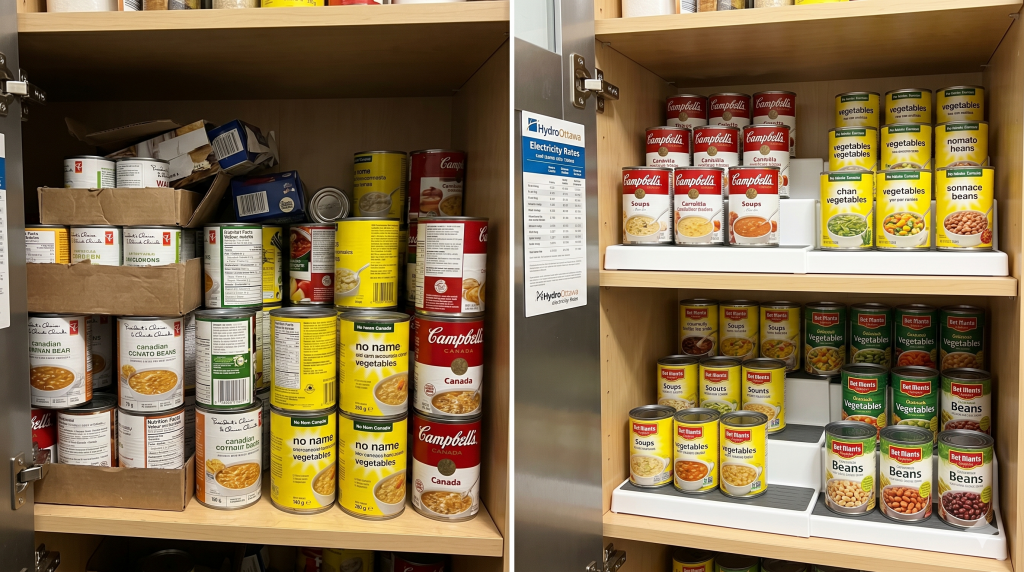
Decanting everything requires buying expensive containers, taking time to transfer the food, and (worst of all) losing the original expiration dates and cooking instructions printed on the boxes.
True sustainable organization is about function, not perfection. You want a system that helps you see what you have at a glance so you don’t accidentally buy a third jar of peanut butter when you already have two hiding in the back. Related reading: Sustainable living on a budget for beginners.
The “Eat Me First” bin
This is one of the cheapest and most effective ways to reduce food waste in your home immediately.
Dedicate a specific, clear bin or a highly visible shelf in your fridge strictly for items that are going to expire soon. This could be half an onion, a yogurt nearing its date, or the last serving of Tuesday’s casserole.
When you (or anyone in your family) open the fridge looking for a snack or trying to figure out what to make for lunch, you check the “Eat Me First” bin before grabbing anything else. It drastically reduces decision fatigue and guarantees those older items get eaten before they end up in the trash.
Stop hiding your leftovers
Leftovers are only useful if you remember they exist. The biggest mistake people make with leftovers is storing them in opaque plastic or ceramic bowls covered with foil. Once you stack something else in front of it, that bowl becomes invisible, and the food inside goes bad.
Invest in a set of clear glass or heavy-duty clear silicone storage containers. When you can actually see the pasta or roasted vegetables sitting on the shelf, you are far more likely to heat them up for a quick lunch. Related reading: Reusable kitchen products that actually save money.
How to organize the fridge for longevity
Where you put your food in the fridge dictates how long it will last.
The Door: The door is the warmest part of the fridge because it is exposed to room temperature air every time it opens. Never put highly perishable items like milk or eggs in the door. Reserve the door shelves for condiments, sauces, and drinks that have a high tolerance for temperature shifts.
The Lower Shelves: These are typically the coldest parts of the fridge (aside from the freezer). Store raw meats, dairy, and easily spoiled items here.
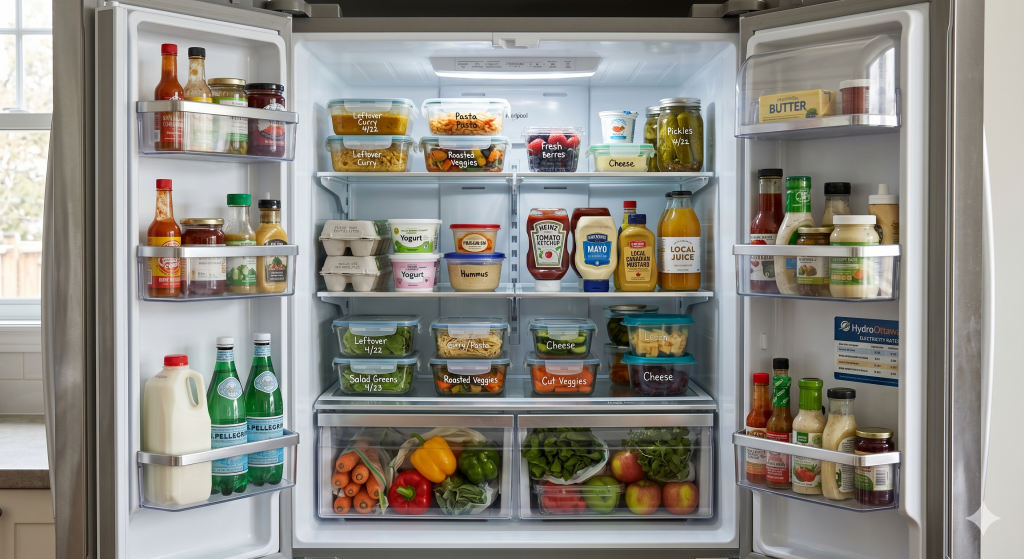
The Crisper Drawers: Use the humidity controls! Leafy greens prefer high humidity, while things that rot easily (like apples or avocados) do better in low humidity. Taking two seconds to separate them will buy you several extra days of freshness. Related reading: How to reduce food waste without overhauling your kitchen.
Pantry organization that actually works
A deep pantry is where food goes to die. If you have deep shelves, you need to group items by “zones” so you can pull them out easily.
Instead of just lining boxes up by height, use simple baskets to group things by meal type or function:
- A “Baking” basket for flour, sugar, and chocolate chips.
- A “Snack” basket for granola bars and crackers.
- A “Breakfast” basket for oats and cereal.
Keep heavy or bulk items on the bottom shelves, and put your everyday cooking staples right at eye level. If you can’t see it without moving three other boxes, you won’t use it.
Use clear, reusable storage for the right things
While you shouldn’t feel pressured to decant everything, using clear, reusable storage is incredibly helpful for bulk items that come in flimsy, tear-prone bags (like rice, lentils, or coffee beans).
Glass mason jars or sturdy airtight containers keep pantry moths away and let you know exactly how much you have left before you head to the grocery store. This prevents overbuying, which is a major key to Sustainable grocery shopping on a budget.
FAQ
What is the best way to store leafy greens?
To keep leafy greens crisp, store them in a glass container or a reusable silicone bag with a dry paper towel or washable cloth tucked inside. The cloth absorbs excess moisture, which is what causes greens to turn slimy.
Should I wash fruit before putting it in the fridge?
Usually, no. Washing berries and delicate fruits introduces moisture that speeds up mold growth. It is much better to wash them right before you plan to eat them.
Do I really need expensive clear bins to organize?
Absolutely not. While clear bins are helpful for visibility, you can easily organize a pantry using old shoeboxes, repurposed delivery boxes, or cheap wire baskets you already own.
Conclusion
An organized kitchen is a cheaper kitchen. By taking just a few minutes to rearrange your fridge and pantry, you can stop throwing your hard-earned money in the trash.
You don’t need a massive overhaul. Start small: clear out the expired items this weekend, designate an “Eat Me First” bin, and stop hiding your leftovers in dark containers. You’ll be amazed at how much less food you waste by the end of the month.
—
Want more practical, realistic tips for running a low-waste, budget-friendly home? Join our newsletter to get our best guides sent straight to your inbox!