Last summer my phone buzzed with an air quality alert three mornings in a row, wildfire smoke drifting in from fires hundreds of miles away, turning the sky a dull orange and pushing the AQI number into territory I’d never seen before. Wildfire season has gotten noticeably worse across both Canada and the US in recent years, and smoke advisories that used to be rare are starting to feel like a normal part of summer. I started looking into what I could actually do about it from inside my own home, and it turns out there’s more useful tech here than I expected, most of it cheap and none of it requiring a contractor.
Quick Answer
You can reduce your wildfire risk and exposure at home with an indoor air quality monitor, a HEPA air purifier for smoke-heavy weeks, free wildfire and smoke-tracking apps for early warning, upgraded smoke/CO detectors, and a small backup power bank in case of outages during an evacuation. None of this requires renovation, and most pieces cost under $150.
Start with knowing your actual air quality, not just the news
The single most useful thing I added was a small indoor air quality monitor that tracks PM2.5, the fine particulate matter that wildfire smoke is mostly made of. City-wide AQI numbers on the news are a rough average, but my apartment’s actual air quality depends on whether my windows are open, whether I ran the exhaust fan, and how well sealed the building is. The monitor tells me the real number in my own living room, not just the neighborhood’s.
Mine syncs to an app and sends a notification when indoor PM2.5 crosses a threshold I set, which is usually my cue to close windows and switch on the air purifier before I’d otherwise notice anything by smell.
Free apps that catch smoke before you can see it
Wildfire and smoke-tracking apps (I use one that overlays real-time fire perimeters and smoke plume forecasts on a map) have caught incoming smoke a full day before it visibly changed the sky here. That lead time is genuinely useful: it’s when I close windows ahead of time, move laundry inside, and skip an outdoor plan I would have otherwise kept.
Most of these are free and pull from the same government fire and air quality data, so the app itself matters less than actually turning notifications on and checking it during fire season, which I didn’t bother doing until after that first bad week.
A HEPA air purifier for the weeks it actually matters
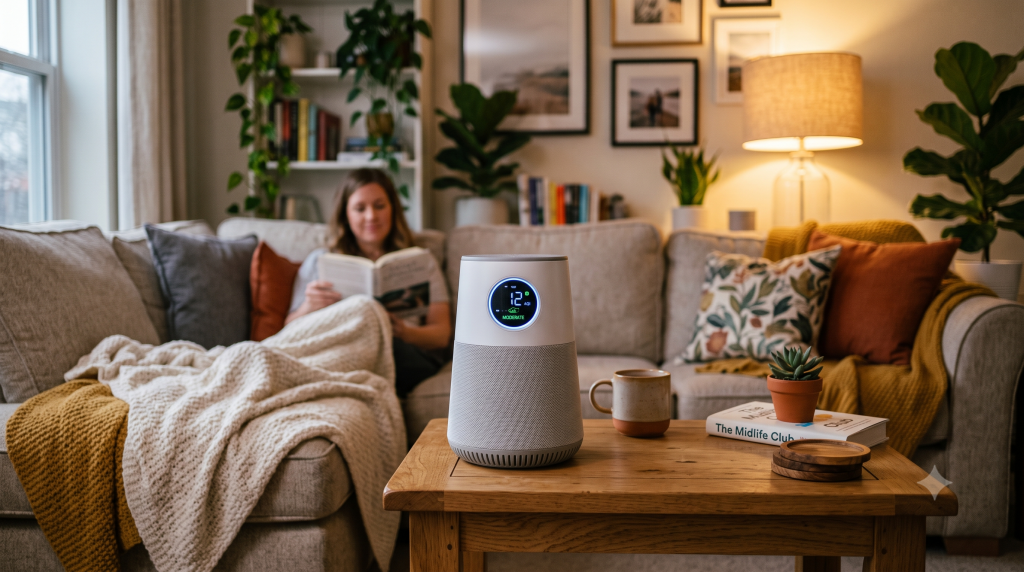
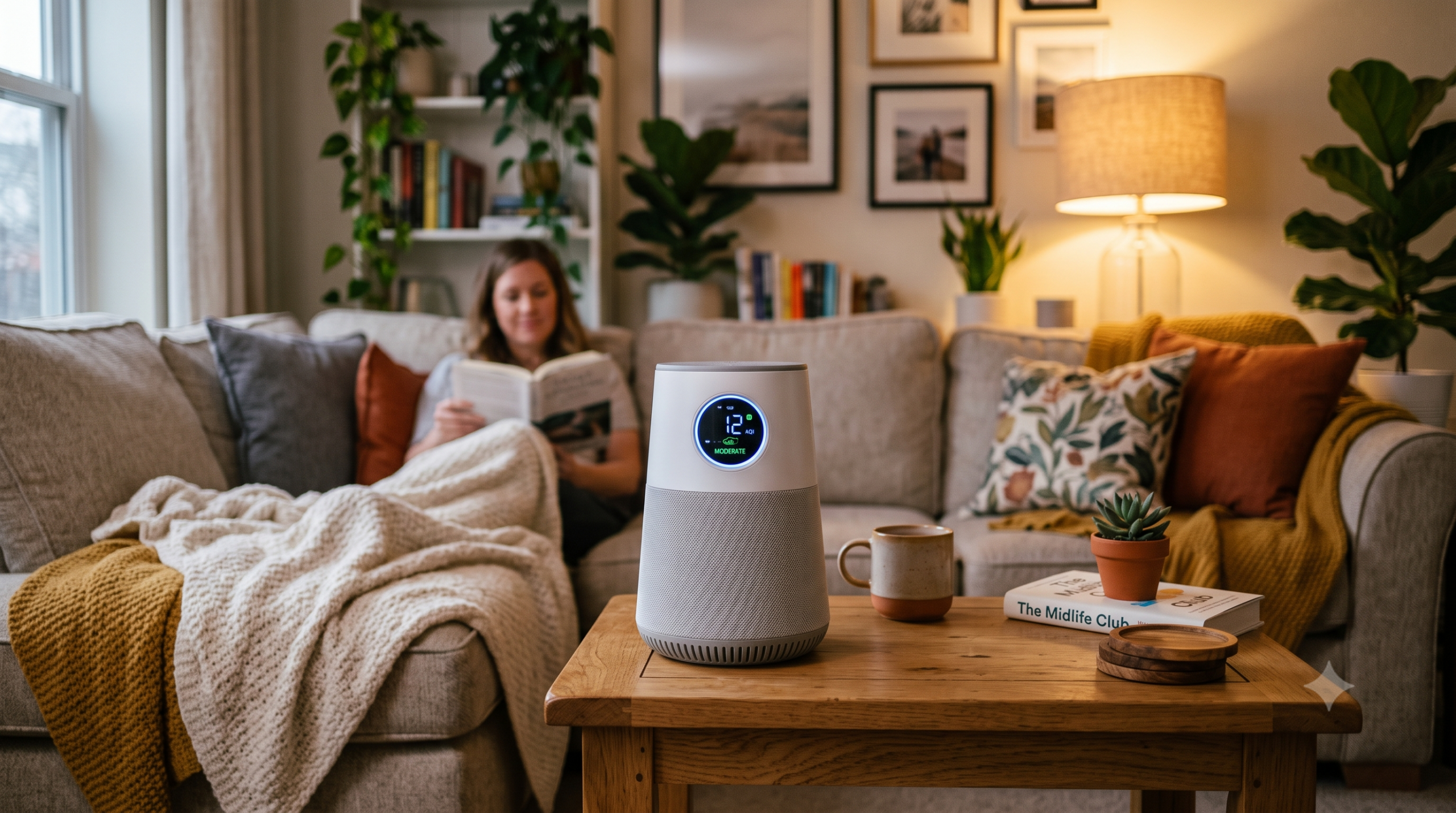
I resisted buying one for years because it felt like a big purchase for something I’d only need occasionally. That framing was wrong: a decent HEPA air purifier with a real-time air quality display runs well under $150 now, and it’s the single thing that made the worst smoke week bearable indoors without needing to run the AC constantly with windows sealed.
I only run mine during actual smoke events rather than continuously, which keeps the filter lasting longer and the electricity cost down. The built-in display doubles as a second confirmation alongside my separate air quality monitor.
Upgrading smoke and CO detectors while you’re at it
This isn’t wildfire-specific, but doing a smoke and carbon monoxide detector check the same week I bought the air purifier felt like the obvious pairing. Mine were original to the apartment and past their recommended ten-year replacement window, which I only discovered by checking the manufacture date stamped on the back.
Newer models with sealed 10-year batteries mean one less thing to remember, and a few now integrate with phone apps so an alert reaches you even if you’re not home, which matters more during a season when you might be running an air purifier and sealing windows more than usual.
A small backup power bank, just in case
Wildfire-adjacent power outages (utilities sometimes cut power preemptively in high fire-risk conditions, and fires themselves can damage lines) are the scenario that convinced me to keep a small portable power bank charged and ready, mostly to keep a phone charged for alerts and maps if the power goes out during an actual evacuation window. I already had one from looking into budget solar gadgets for renters, and it turned out to double as wildfire-season prep without me planning that overlap.
I don’t treat mine as a whole-home backup, just enough to keep a phone charged and a small light running for a few hours if needed.
What I actually check during a bad smoke week
My routine now: check the smoke-tracking app in the morning, glance at my indoor monitor before deciding whether to open windows, and keep the air purifier ready to switch on rather than running it constantly by default. It sounds like a lot written out, but in practice it’s a two-minute morning habit, not an ongoing chore.
What tech can’t do, and why the other half of this matters
None of this reduces the actual fire risk to a home, it only helps manage air quality and early awareness indoors. Reducing your home’s physical risk of ignition is a separate, equally important piece, and I’ve written up the sustainable, mostly free changes that made the biggest difference for that side of things separately, since it deserves its own full breakdown rather than a rushed paragraph here.
Frequently Asked Questions
🌿 Do I need both an air quality monitor and an air purifier?
Not strictly, but they solve different problems. The monitor tells you when there’s a problem; the purifier is what you do about it. I’d prioritize the monitor first since it’s cheaper and tells you whether you even need a purifier in your specific space.
🌿 Are wildfire smoke apps accurate?
In my experience, close enough to be genuinely useful for planning, especially for the smoke-plume forecast layer. They pull from official fire and air monitoring data, so accuracy depends on that underlying data, not the app itself.
🌿 How long do HEPA air purifier filters last during smoke season?
Mine is rated for about a year of normal use, but I’ve replaced it sooner during an especially smoky summer since heavy use during smoke events wears filters down faster than everyday operation.
🌿 Is it worth buying this tech if bad wildfire smoke is rare where I live?
The air quality monitor and smoke detector upgrades are useful regardless. I’d hold off on the air purifier specifically until you’ve had at least one genuinely bad smoke week, since that’s the piece with the most upfront cost.
🌿 What should I do if I get an evacuation order?
Follow official evacuation guidance immediately. None of the tech here is a substitute for that; it’s for the ordinary smoke-season weeks in between, not for an active emergency.
Final NatGreen thoughts
None of this is about fear, it’s about a handful of small, mostly inexpensive tools that make an increasingly normal part of summer easier to manage from inside your own home. Start with the air quality monitor and a smoke-tracking app since they’re the cheapest, lowest-effort additions, then decide if a purifier makes sense for your specific summers.
Ready to try it? Turn on notifications for a wildfire smoke-tracking app today, that alone gives you a head start the next time smoke rolls in.