A conversation with another parent about asbestos testing in children’s crayons sent me down a research spiral I wasn’t expecting to go down during back-to-school shopping. It turns out most name-brand crayons are genuinely safe, but there are specific things worth checking, especially with less-regulated imported brands that show up in bargain multi-packs.
Quick Answer
Most major crayon and marker brands sold in the U.S. meet safety standards and are safe for kids, but look for ASTM D-4236 certification on the label (indicating the product has been evaluated for safety), avoid unbranded bulk multi-packs with no clear manufacturer information, and choose water-based, non-toxic labeled markers over solvent-based ones for younger children.
What actually prompted my concern
The specific conversation was about a study that tested a range of crayons, including some imported bargain brands, for asbestos-related fibers and heavy metals, finding concerning results in a handful of products, generally not well-known name brands. It wasn’t a reason to panic about all crayons, but it was enough to make me actually check what we had at home.
Everything in our supply bin from established name brands checked out fine once I looked into their safety certifications, but it made me more careful about the unbranded bulk packs I’d bought in the past purely for the low price.
What to actually look for on the label
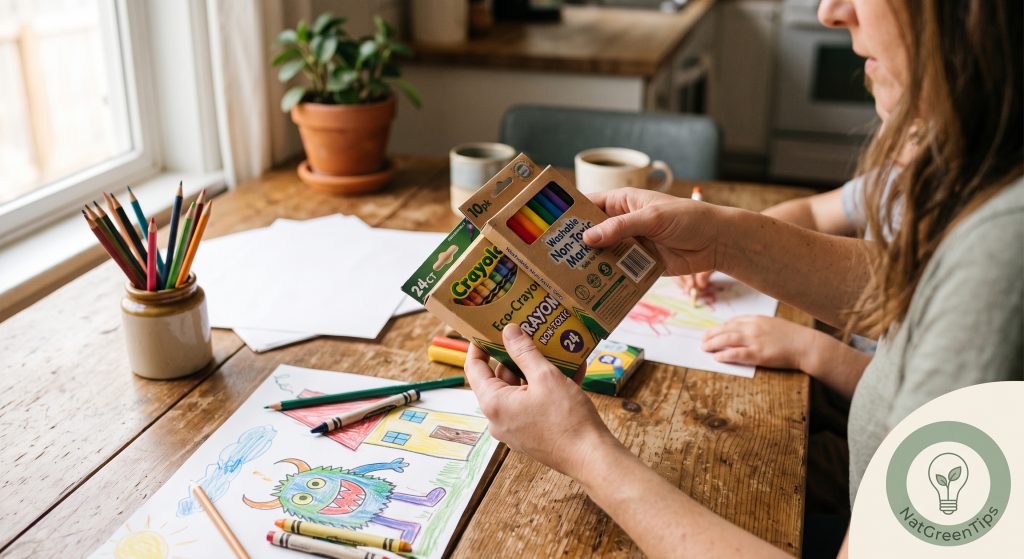
The ASTM certification was the single most useful thing I learned to look for, it’s a specific, checkable standard rather than a vague marketing claim.
- ASTM D-4236 certification: indicates the product has been evaluated under U.S. art material safety standards
- A clear manufacturer name and address, not just a vague “made for” label with no traceable source
- “Non-toxic” specifically stated, not just implied by marketing imagery
- For markers: water-based rather than solvent or alcohol-based, especially for younger kids
We’ve stuck with a ASTM-certified crayon set since it’s clearly labeled, and it’s held up well through a full school year of daily use.
Where I got more cautious
Very cheap, unbranded bulk multi-packs, the kind sold in bins with no clear manufacturer name, are where I’ve become more careful. These are exactly the kind of products that don’t always go through the same testing as recognized name brands, and the savings versus a reputable brand are often smaller than they first appear.
I still buy in bulk for things like pencils, but for crayons and markers specifically, I now stick to recognized brands even if it costs slightly more per unit.
Markers specifically, since they’re a bit different from crayons
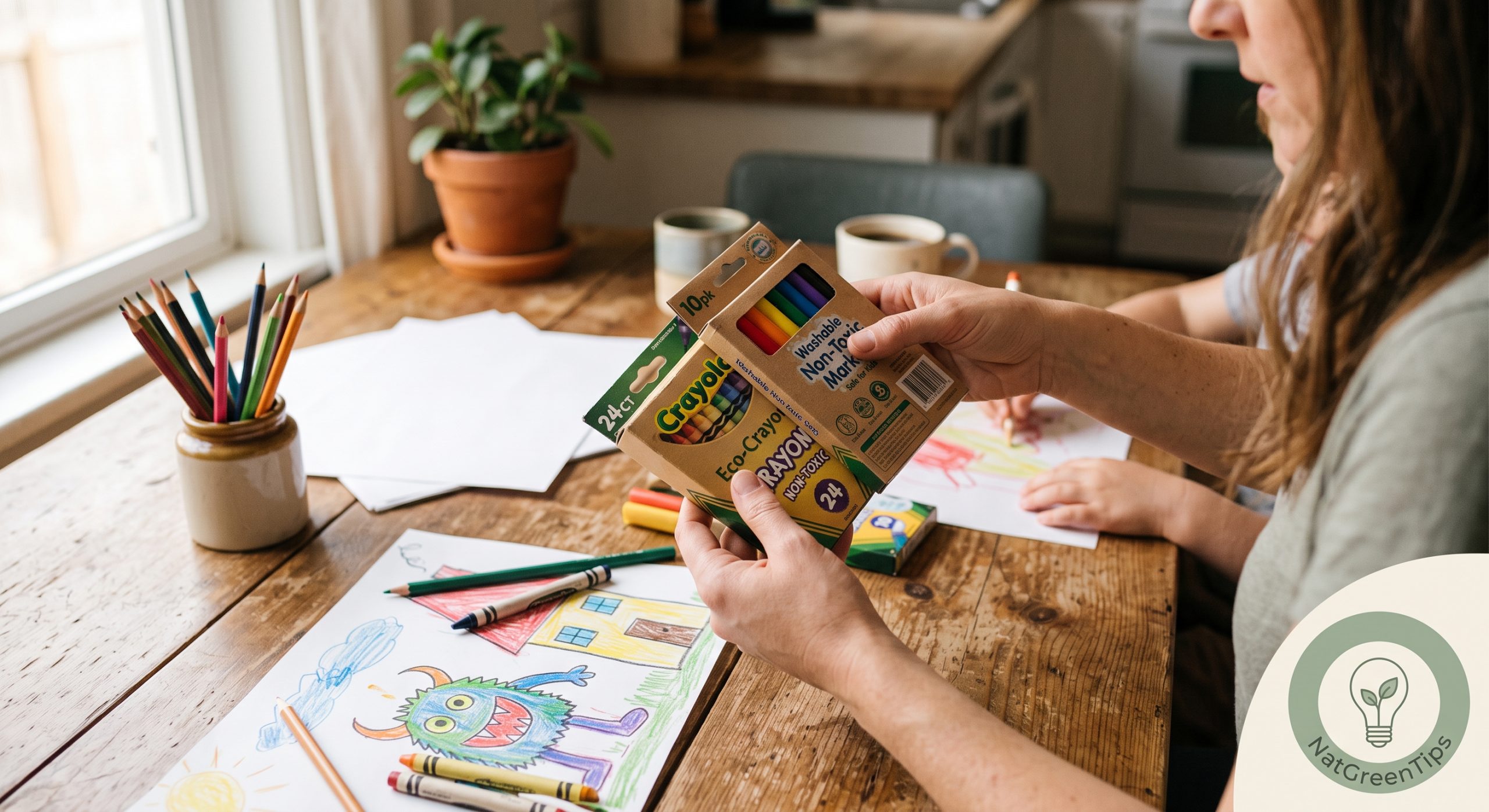
Solvent or alcohol-based markers (the kind with a stronger chemical smell) are more of a concern for younger kids who might have more direct or repeated contact with them, including occasionally putting them near their mouths. Water-based, non-toxic labeled markers are the safer default for elementary-age kids in my research.
I’ve kept a few solvent-based permanent markers in the house for specific labeling tasks, just not in my kids’ everyday art supply bin where they’d have unsupervised access to them.
What I did with our existing supplies
I checked every crayon and marker box we owned against the ASTM certification and manufacturer information, and everything from name brands passed without concern. The only items I actually got rid of were a couple of very cheap, unbranded bulk packs I honestly don’t remember buying, that had no clear manufacturer information at all.
This wasn’t a full supply overhaul, more a targeted check of the specific bargain items that raised questions once I knew what to look for, the same targeted approach I use for checking other school supplies for phthalates.
Keeping this in perspective
I don’t want to overstate the risk here, established, name-brand crayons and markers sold at major retailers are generally safe and have been for decades. This is really about being aware of a specific gap that exists with less-regulated bargain bulk products, not a reason to be anxious about art supplies broadly.
My actual takeaway was simple: stick with recognized brands for crayons and markers specifically, check for the ASTM certification when in doubt, and don’t feel obligated to replace supplies that are already checking out fine.
How I store crayons and markers to make them last longer
This isn’t strictly a safety issue, but it’s connected to the same “buy fewer, choose well” mindset. Crayons left in a hot car or near a sunny window melt and fuse together within a single afternoon, which used to mean replacing a whole box over something completely preventable. I keep ours in a closed bin away from direct sun now, tucked on a closet shelf rather than a car console or a windowsill, and it’s genuinely extended how long a single set of crayons and markers lasts us through the school year.
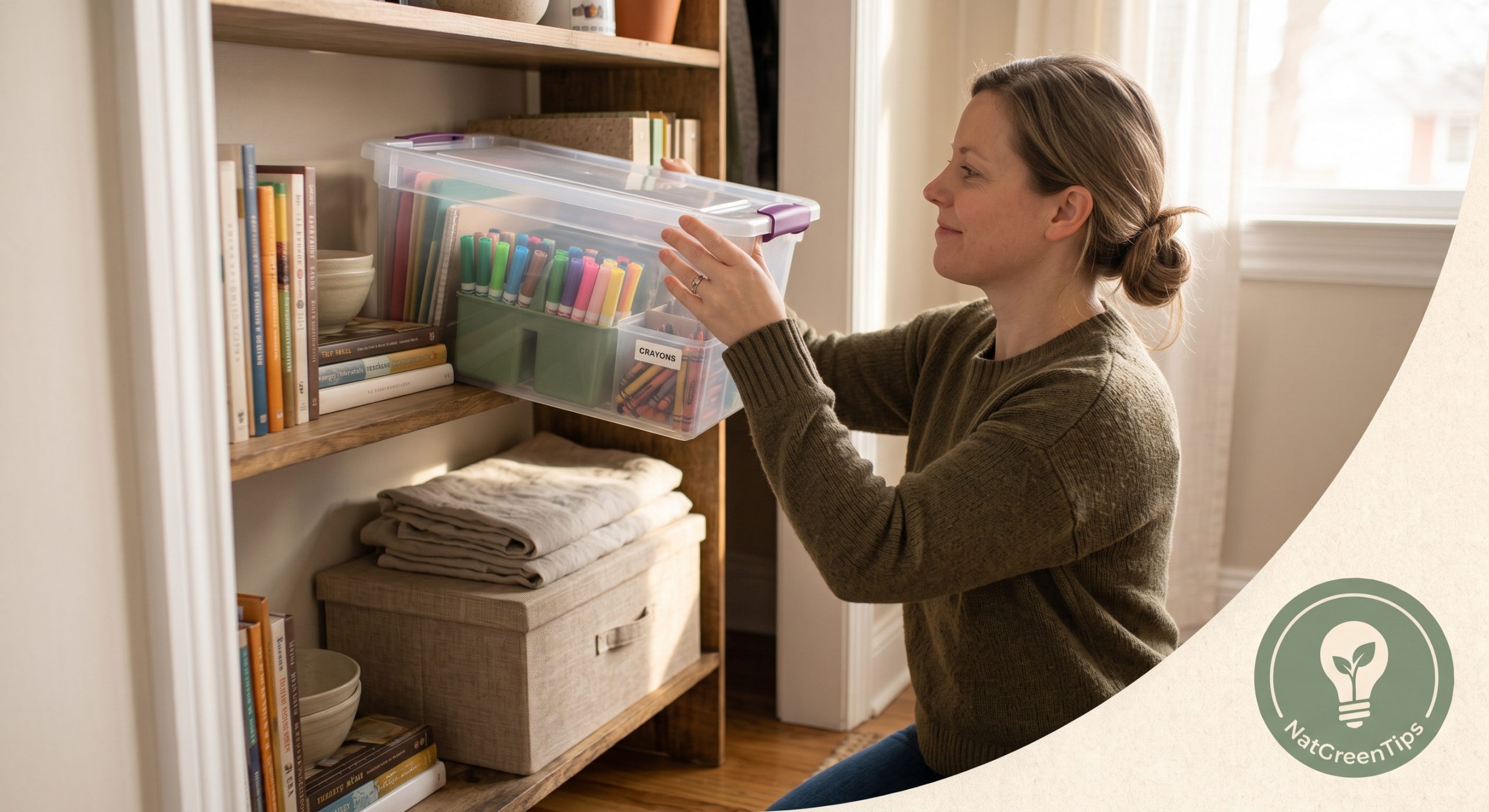
Markers dry out fastest when they’re left uncapped, which happens constantly with younger kids mid-project. I do a quick cap check at the end of each art session rather than assuming they got capped properly the first time, it’s a small habit that’s cut down noticeably on markers getting tossed early just because they dried out from a missing cap left off overnight.
What I’d tell a teacher about classroom supplies
Classroom art bins are usually a mix of donated supplies from a dozen different families, which means the ASTM-certification check I do at home doesn’t really happen at the classroom level in the same way. When I’ve donated supplies to my kids’ classroom, I’ve started sticking to the same recognized, ASTM-certified brands I’d buy for home use, rather than treating classroom donations as the place to offload a leftover bargain bulk pack.
If you’re a parent wondering whether to raise this with a teacher directly, I’d frame it gently, most teachers are grateful for any donated supplies and aren’t necessarily thinking about certification labels on what’s handed over, not because they don’t care, but because it’s simply not the first thing on a busy teacher’s mind during a hectic September classroom setup.
Frequently Asked Questions
🌿 Is the ASTM D-4236 certification hard to find on packaging?
It’s usually printed in small text on the box, often near the ingredient or safety information, I didn’t notice it until I specifically went looking for it, but it’s there on every name-brand product I actually checked.
🌿 Are all imported crayons unsafe?
No, not all, but the products flagged in the safety concerns I read about tended to be unbranded or less-traceable bulk imports specifically, not every imported product broadly, and definitely not every recognized international brand sold in mainstream stores.
🌿 What age should kids be before using solvent-based markers?
I’ve kept them out of my younger kids’ everyday supplies entirely and only use them myself for specific labeling tasks, reserving water-based options for their actual art use.
🌿 Should I be worried about crayons and markers we’ve had for years?
If they’re from a recognized brand, I wouldn’t worry retroactively, my own check was mainly about identifying the handful of unbranded bulk items that lacked any real safety information.
🌿 Is it worth donating crayons and markers to a classroom supply bin?
Yes, teachers generally appreciate it, I’d just apply the same ASTM-certified, recognized-brand standard to anything donated that I’d use for supplies at home.
Final NatGreen thoughts
Checking for ASTM D-4236 certification and a clear manufacturer name on crayons and markers takes a minute and closes most of the gap, without needing to replace anything already checking out fine. The same “check the actual label, not the marketing” habit applies broadly, see our guide on spotting greenwashed claims for more on that.
Ready to try it? Check one box of crayons or markers in your kids’ supply bin tonight for the ASTM D-4236 label, it’s the fastest way to know where you stand.