When I first started looking for ways to live more sustainably, I spent a lot of time in the kitchen (mainly in the mornings getting the kids out the door), and believe me, it’s the easiest place to see waste. From the paper towels, to the plastic wrap, the bags of groceries and so many more opportunities.
But as I looked around the rest of my home, I realized the bathroom and the laundry room were also full of hidden, recurring costs. These are the rooms where we often fall into the habit of buying “convenience” products without realizing how much they drain our budget over time.
If you’re a beginner looking for the best reusable household products, the goal isn’t to buy everything at once. The goal is to identify the few items that are inexpensive to buy but replace a high-frequency disposable cost.
True sustainability in the home is about Return on Investment (ROI). You want products that are simple to use, easy to maintain, and that pay for themselves in a matter of months.
Quick Answer: What are the best reusable household products to buy first?
The best reusable household products for beginners are wool dryer balls for the laundry, a stainless steel safety razor for the bathroom, and rechargeable batteries for your electronics.
These items are considered the “best” because they replace high-frequency disposable purchases (dryer sheets, expensive razor cartridges, and one-time-use batteries), offer a clear financial payback, and require very little change to your daily routine.
The ROI of household reusables
One of the biggest mistakes people make when buying “green” products is focusing on aesthetics over utility. A beautiful bamboo set looks great on a shelf, but if it doesn’t solve a real spending problem, it isn’t helping your budget.
When judging the best reusable household products, always look at the payback period. How many packs of disposable batteries do you need to avoid buying to pay for the rechargeable set? How many boxes of dryer sheets does it take to pay for the dryer balls?
Usually, the smartest reusables are the ones that are boring. They aren’t “lifestyle accessories”; they are tools that save you money by stopping a leak in your bank account. Related reading: sustainable living on a budget for beginners.
Bathroom: Beyond the plastic bottle
The bathroom is often the most plastic-heavy room in the house. Between shampoos, soaps, and shaving supplies, the amount of waste (and repeat spending) is massive.
- Safety Razors: If you are still buying plastic cartridge razors, you are paying a massive premium for the convenience of throwing the head away. A stainless steel safety razor is a one-time purchase. The replacement blades cost pennies, meaning this swap can save you over $100 a year.
- Bamboo Toothbrushes: While not purely “reusable,” they are a sustainable alternative that is often just as cheap as plastic versions. Because you replace them every few months, choosing a compostable version significantly reduces your plastic footprint at a zero-cost difference.
- Reusable Makeup Remover Pads: If you use cotton rounds every night, you are buying and throwing away hundreds of items a year. A set of washable cotton or bamboo pads can be thrown in with your regular laundry and last for years.
Laundry: Cutting the chemical cords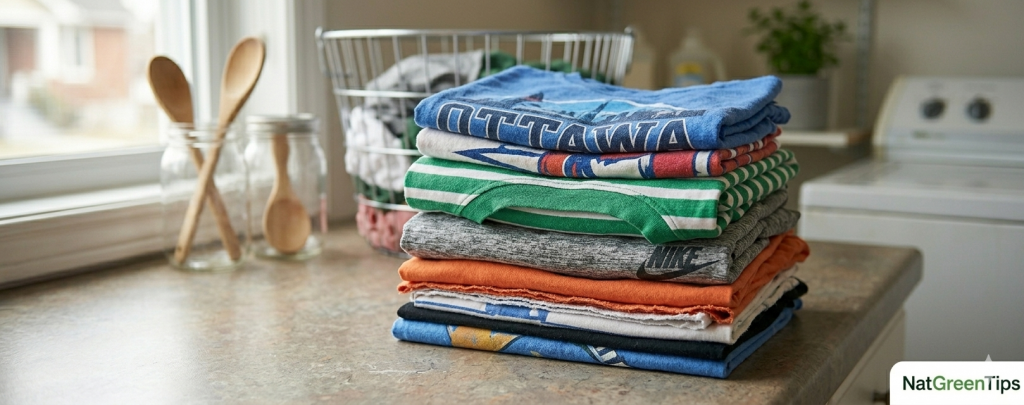
Laundry is one of the most resource-heavy chores in the home. Most people use expensive, chemical-heavy products to solve problems that reusables can handle better.
- Wool Dryer Balls: These can actually be a game-changer. Why? you might ask….They separate your clothes as they tumble, which improves airflow and reduces drying time (saving electricity). They also naturally soften fabrics and reduce static, completely eliminating the need for dryer sheets or fabric softener. I’ve just got some more as it appears it’s best to have about 4 or 5 in a full load.
- Reusable Laundry Strips or Concentrates: While still a “consumable,” moving away from heavy plastic jugs of liquid detergent is a smarter move. Concentrated strips are lightweight, use minimal packaging, and are often cheaper per load. Related reading: how to save money on laundry.
Home Office and Living Area: The Power of Rechargeables
If you have a home with remotes, wireless mice, children’s toys, or flashlights, you are likely caught in the “battery cycle.”
Rechargeable batteries are arguably one of the best reusable household products you can own, a single set of high-quality AA or AAA rechargeables can be used hundreds of times. Even when you factor in the initial cost of the batteries and the charger, the long-term savings compared to buying single-use alkaline batteries are enormous.
To make this work, buy one extra set so you always have a “ready” pair while the others are on the charger. This removes the convenience hurdle of waiting for a charge, and it works for me every time (except for when my kids want to also use the batteries too).
How to choose what to buy next
If you are feeling overwhelmed, stop looking at “top ten” lists and start looking at your own trash can.
What are you throwing away the most of?
- If it’s dryer sheets, buy dryer balls.
- If it’s plastic razor cartridges, buy a safety razor.
- If it’s AA batteries, buy rechargeables.
The best reusable household products are the ones that fit naturally into your life. If a swap feels like a huge chore or requires a complex new routine, you won’t stick with it. Start with the easiest, highest-impact changes first. Related reading: cheap eco-friendly swaps that save money.
FAQ
Are reusable bathroom products hygienic?
Yes. As long as you wash your reusable pads and cloths regularly and keep your safety razor clean and dry between uses, they are just as hygienic as disposable versions.
How long do safety razor blades last?
A single double-edged blade usually lasts for 5-7 shaves, depending on hair thickness. Since a pack of 100 blades costs about $10-$15, the cost per shave is incredibly low.
Are dryer balls better than dryer sheets?
Yes. They reduce drying time (saving energy), don’t coat your clothes in synthetic waxes/chemicals, and can be reused for thousands of loads. They are better for your wallet, your machine, and the environment.
Our Conclusion
The best reusable household products are the ones that work in the background. They aren’t meant to be “lifestyle accessories”—they are meant to be durable, practical tools that replace a recurring expense.
By starting with high-impact items like wool dryer balls and rechargeable batteries, you can systematically reduce your household waste and pad your savings account at the same time. Focus on the practical, and let the savings motivate you to keep going.
—
Want to see more ways to stop throwing money in the trash? Read our guide on the best cheap eco-friendly swaps that actually save money over time.