When my daughter’s school introduced a uniform policy, my first instinct was to buy everything new from the approved supplier, until another parent mentioned she’d found nearly identical secondhand school uniforms for a fraction of the price. That conversation saved us a genuinely significant amount over the two years since, and it turns out uniforms are one of the easiest categories to buy secondhand, since sizing and style are far more standardized than regular clothing.
Quick Answer
Secondhand school uniforms can be found through school-specific uniform swap programs (many schools run these directly), local parent Facebook groups, consignment stores near your school, and general secondhand marketplaces. Uniforms are especially well-suited to secondhand shopping because standardized sizing and limited wear (many kids outgrow uniforms before wearing them out) mean quality is often excellent.
Where I’ve actually found the best deals
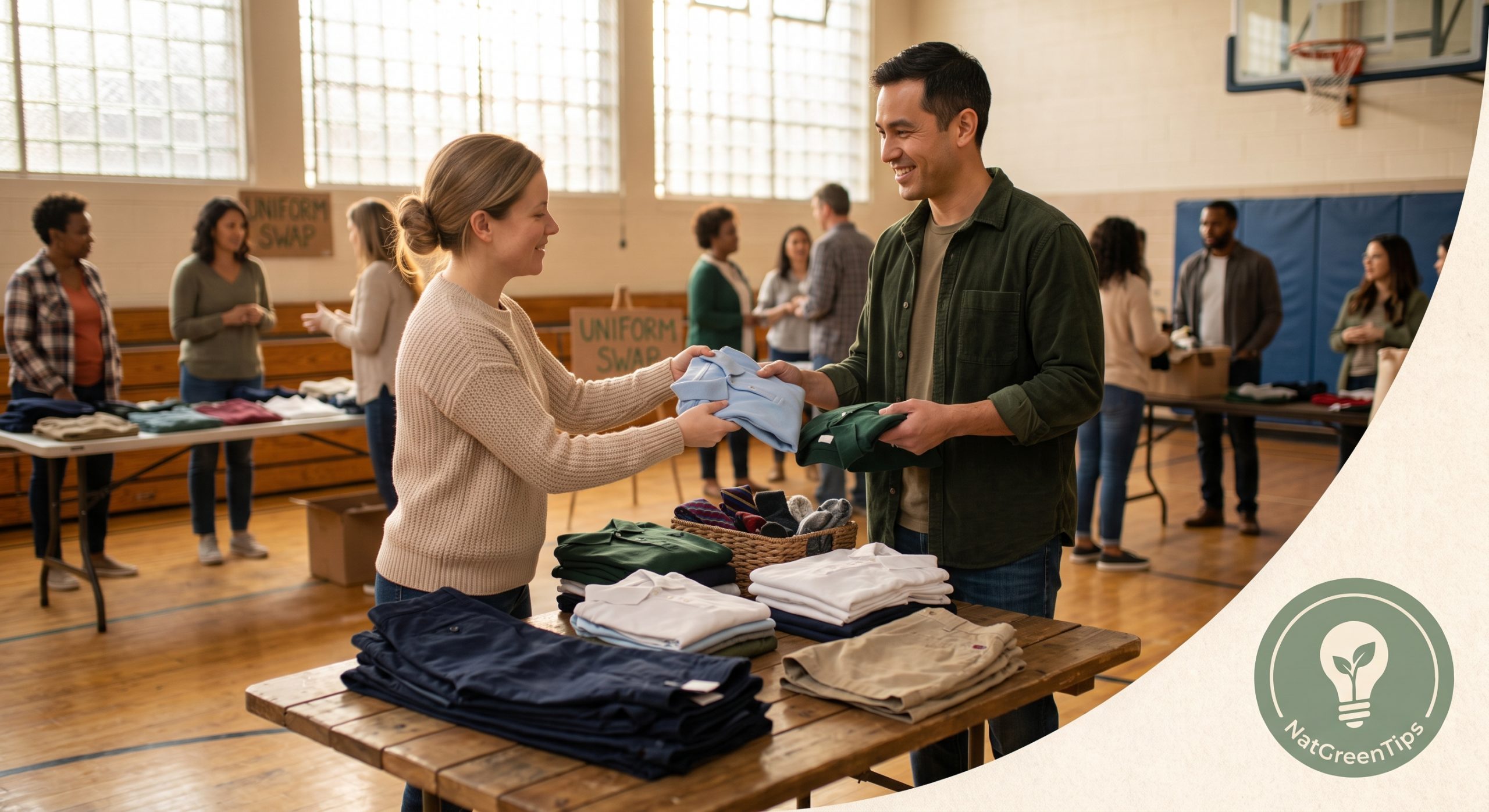
The school’s own swap program has been the single best source for us, it’s essentially free (a small donation, in our case) and the pieces come directly from other families at the same school, so sizing expectations are already aligned.
- The school’s own uniform swap or resale program, if one exists (ours runs one twice a year)
- A local parent Facebook group specific to our school, often the fastest and cheapest option
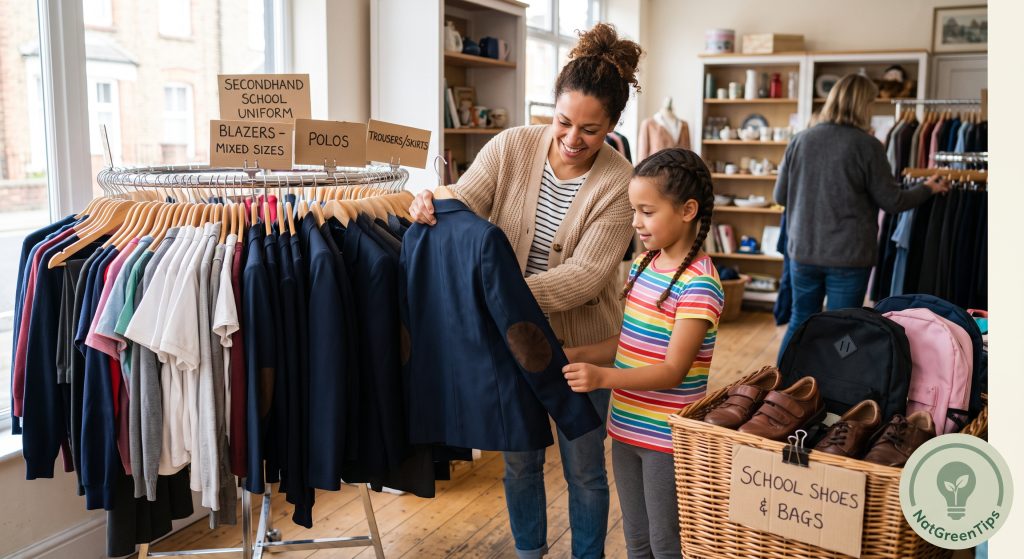
- Consignment stores near schools with uniform policies, which often stock standardized pieces specifically
- General secondhand marketplaces for specific brand-name uniform pieces
Why uniforms are especially good candidates for secondhand
Kids grow out of uniforms constantly, often well before the fabric shows real wear, a growth spurt over a summer can mean a barely-worn uniform gets passed along in excellent condition. That’s a meaningfully different situation than regular clothing, which tends to see more variable wear based on how much a kid actually likes and wears a specific piece.
Standardized sizing also helps enormously, since every uniform piece from a given supplier follows the same sizing chart, buying secondhand carries much less of the fit uncertainty that regular secondhand clothes shopping involves.
What to check before buying
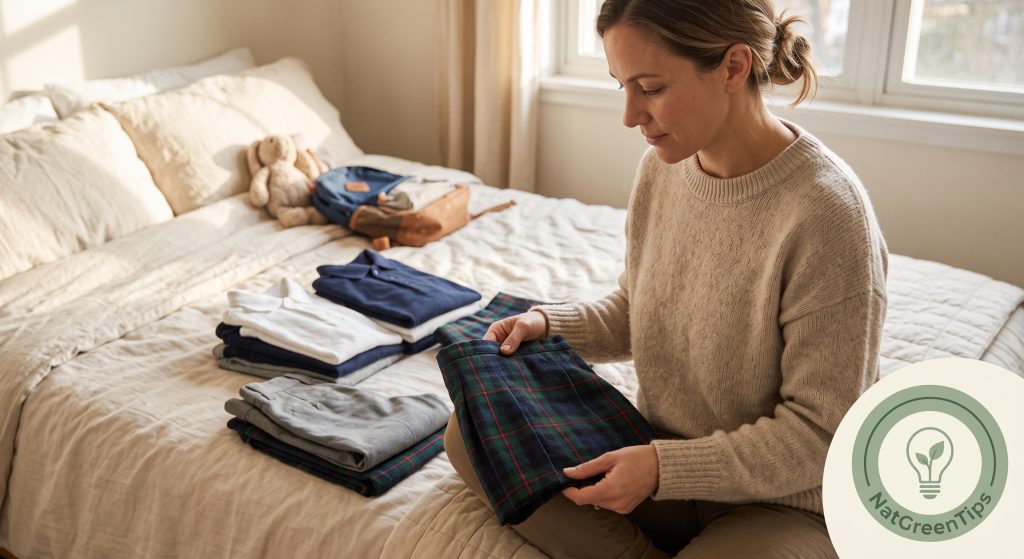
- Fabric condition at stress points: knees, elbows, and seat for pants and skirts
- Logo or embroidery condition, if the uniform requires a specific school emblem
- Zipper and button function
- Any specific fabric requirements the school has (some require specific weights or blends for weather)
The school swap program specifically
I’d genuinely encourage checking whether your school runs one before looking anywhere else, ours is organized by the parent association twice a year, right before the school year starts and again mid-year, and it’s essentially a free clothing exchange limited to families at the same school.
If your school doesn’t have one, it might be worth suggesting it to the parent association, ours started because one parent raised it, and it’s become one of the more popular recurring events on the school calendar.
What I’ve learned about timing
Uniform swaps and secondhand listings are most abundant right after the school year ends in June, when families are cleaning out closets before the growth spurt happens over summer, and again right before school starts as families realize what no longer fits.
I’ve started buying a size or two ahead when I find a great secondhand deal during the summer lull, rather than waiting until the last minute and having fewer options to choose from. A portable fabric shaver has been useful for freshening up secondhand pieces before they’re worn for the first time.
How this fits into a bigger sustainable back-to-school approach
Uniforms were actually the easiest secondhand win in our whole back-to-school routine, easier than school supplies or lunch gear, simply because the standardization removes most of the guesswork that makes secondhand clothing shopping harder generally.
It’s become the first place I look each year before buying anything new, and it’s freed up budget for the pieces, like a good pair of shoes, where I do prefer to buy new. For uniform pieces that do wear out, our guide to repairing clothes instead of replacing them covers the basics that have extended a few pieces past a second kid.
How much buying secondhand school uniforms actually saved us
I started tracking this properly last year out of curiosity. A full set of new uniform pieces from our approved supplier ran close to $180 for one kid. Buying secondhand school uniforms through the swap program and a local Facebook group, we spent under $40 for pieces in genuinely good condition, most of them barely worn before a growth spurt moved the previous owner on. Multiplied across two kids and two years, that’s real money that went toward the shoes and backpack I do prefer buying new, categories where fit and support matter enough to me that I don’t feel comfortable cutting corners on them.
The other saving that’s easy to miss is time, not just cost. A swap program pickup takes me twenty minutes; ordering new from the approved supplier and waiting on shipping has, more than once, cut it closer to the first day of school than I’d like, especially the years I underestimated how fast a summer growth spurt would make last year’s sizing chart useless.
Where I’d be more cautious with secondhand school uniforms
Not every piece is a good secondhand candidate. Elastic waistbands on pants and skirts lose their stretch with wear in a way that’s hard to spot until a kid’s actually worn them a few times, so I check that specifically rather than just looking at fabric condition. I also buy underwear, socks, and anything worn directly against skin new, every time, regardless of price, that’s not a category I’ve ever felt comfortable buying secondhand.
PE uniforms with a specific school logo printed (not embroidered) can be harder to find secondhand in good shape too, since the print tends to crack or fade faster than embroidered emblems do. For those specifically, I’ve had better luck buying new and saving the secondhand searching for the standard polo shirts and bottoms instead, which make up most of the uniform anyway and are the pieces where secondhand condition is easiest to judge at a glance before handing over any money.
Frequently Asked Questions
🌿 Does my school need to have an official swap program for this to work?
No. A parent Facebook group or general consignment store works well even without an official program, though an official one tends to be the cheapest and most convenient option if it exists.
🌿 How do I know if a secondhand uniform piece meets the school’s exact requirements?
I check the specific fabric and logo requirements against the school’s own uniform policy document before buying anything secondhand, just to avoid a mismatch that requires an annoying return trip later.
🌿 Is it worth buying uniforms a size ahead?
Yes, if you find a great deal during a swap or sale, kids’ growth is predictable enough that buying slightly ahead has saved us from a last-minute scramble more than once.
🌿 What condition should I avoid buying, even at a good price?
Anything with visible fading or wear at the knees or seat, since those spots tend to wear through faster and won’t hold up for a full school year even if the price looks appealing.
🌿 Are there any uniform pieces I shouldn’t buy secondhand?
Underwear and socks, I buy those new regardless of price. Printed (not embroidered) logo pieces are also worth buying new if you can, since the print tends to crack faster than the fabric does.
Final NatGreen thoughts
Secondhand school uniforms are the easiest win in the whole back-to-school routine, check your school’s own swap program first, then a local parent group, before looking anywhere else.
Ready to try it? Ask your school’s parent association this week whether a uniform swap program already exists, if it doesn’t, it might be worth starting one.