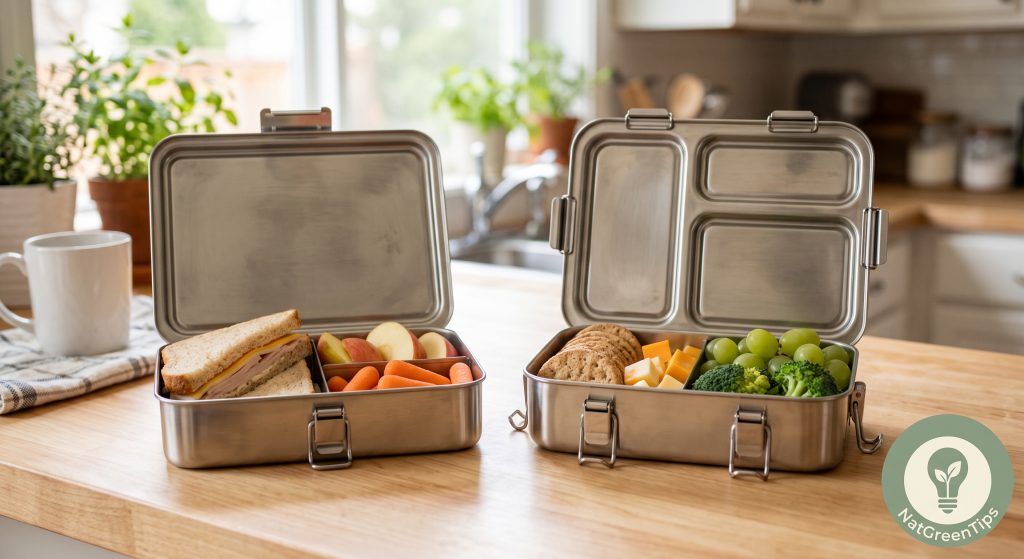
After my earlier lunch box disasters, I actually bought both a Bentgo and a Planetbox at the start of this school year to run my own Bentgo vs Planetbox comparison, alternating which one my kid used week to week. A full school year of genuine daily use later, I have real opinions about where each one wins.
Quick Answer
Bentgo tends to win on price, ease of opening for younger kids, and lighter weight, while Planetbox tends to win on long-term durability and leak resistance, thanks to its stainless steel construction versus Bentgo’s largely BPA-free plastic build. For younger elementary kids prioritizing ease of use, Bentgo is often the better fit; for durability over multiple years, Planetbox has the edge.
How I actually tested these
My kid alternated which lunch box he used week to week for the full school year, and I tracked how each one held up, leaks, cracks, ease of opening, and how clean they came out of the dishwasher over time. This wasn’t a scientific study, just genuine daily use in a real elementary school backpack.
Both survived the year, which was itself informative, since my previous budget plastic bento box hadn’t made it that far. For the full breakdown of what to check on any lunch box label, see our non-toxic lunch box guide.
Material and construction
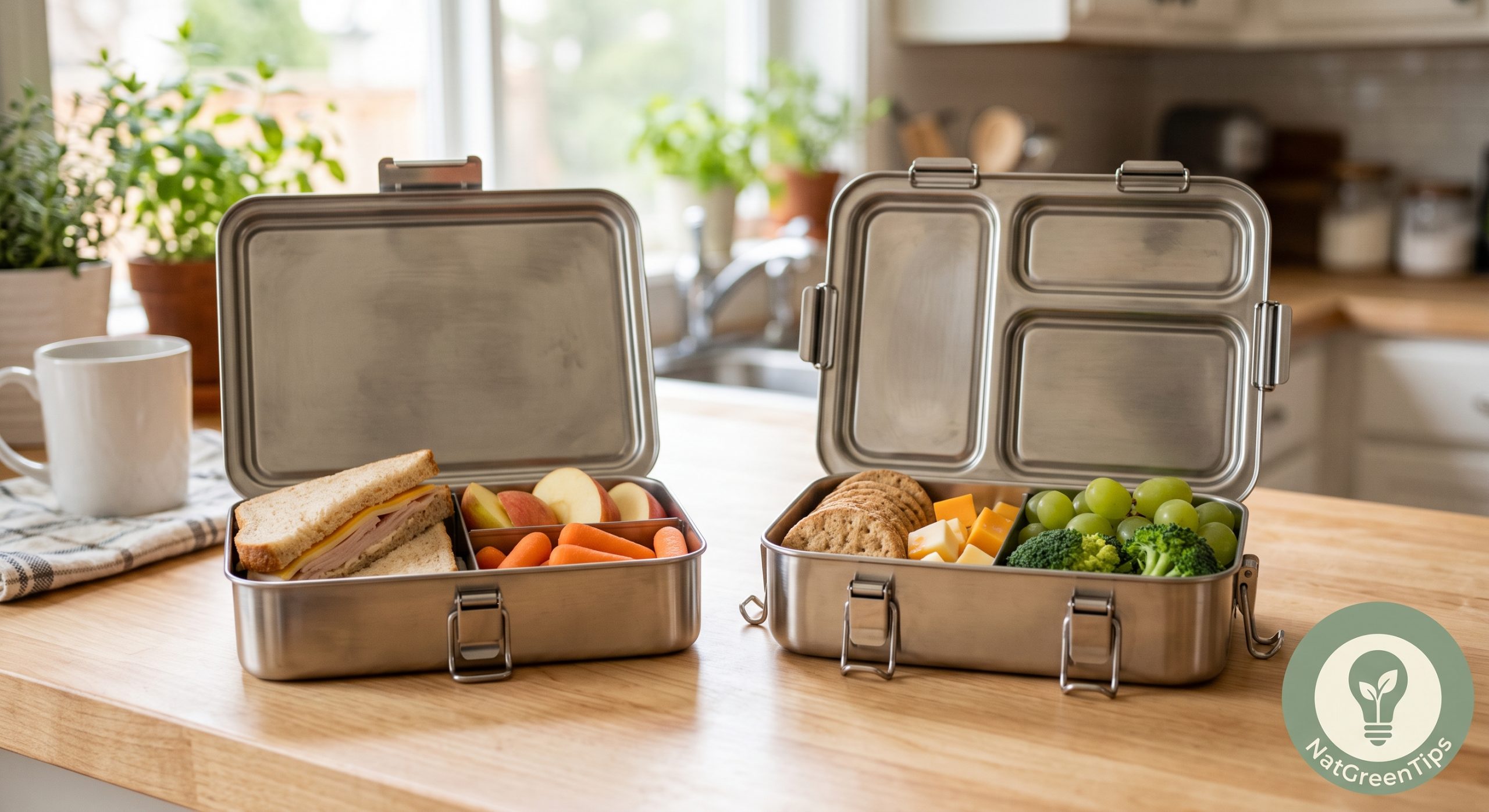
Planetbox is stainless steel throughout, which held up to daily drops and the occasional backpack squish without any dents or cracks. Bentgo’s construction is largely BPA-free plastic with a stainless steel option available at a higher price point, we tested their standard plastic version.
The Bentgo plastic did develop some very minor scratching over the year, mostly cosmetic, but showed no cracking or structural issues either. We tested a Bentgo Kids 5-compartment lunch box specifically for this comparison.
Ease of use for an elementary-age kid
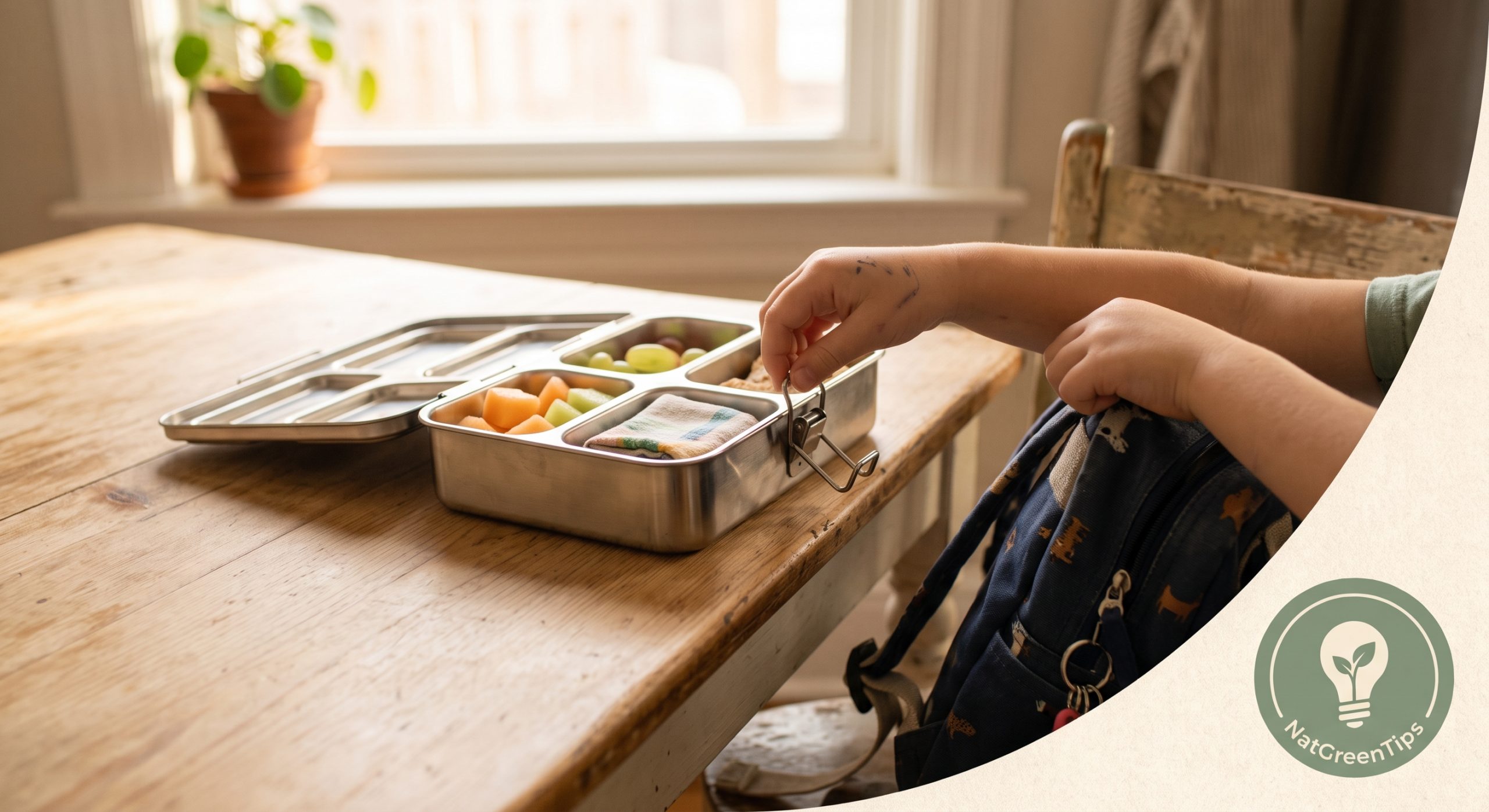
This was where Bentgo won clearly for us. Its latch system was easier for my son to open independently from day one, while the Planetbox’s clip closures took him a few weeks of practice before he could manage them confidently without help at lunch.
If your child is younger or newer to opening their own lunch container, this is worth weighing seriously, a beautifully durable lunch box that a six-year-old can’t open alone creates a different kind of daily problem.
Leak resistance
Planetbox’s stainless steel construction and tighter compartment seals handled liquid-adjacent foods (yogurt, sauces) noticeably better over the year, we had zero leaks. Bentgo held up well for dry and semi-dry foods but had two minor leak incidents with yogurt specifically, though nothing dramatic.
If your child’s lunches lean toward wetter foods regularly, soups, yogurt cups, saucy leftovers, this is a real point in Planetbox’s favor based on our full year of side-by-side testing.
Price and long-term value
Bentgo’s standard version costs meaningfully less upfront than Planetbox, which matters if you’re budget-conscious for this particular purchase as part of your overall back-to-school budget. Given both survived a full year without real damage, the value calculation depends on how many years you expect to get out of either box.
My honest expectation, based on the wear patterns I saw, is that Planetbox will likely outlast Bentgo over multiple years due to the steel construction, but Bentgo’s lower upfront cost may make more sense if you replace lunch boxes more frequently anyway as kids’ preferences change.
My actual recommendation after this Bentgo vs Planetbox test
For a younger elementary kid just learning to manage their own lunch container, I’d lean Bentgo for the easier latch system, accepting a slightly higher leak risk with wetter foods. For an older kid, or if you want the box to genuinely last multiple years, Planetbox’s steel construction and better leak resistance make the higher upfront cost worth it.
We’ve actually kept both in rotation rather than picking a single winner, my younger child uses the Bentgo, and my older one has moved to the Planetbox now that he’s more confident with the clips.
Bentgo vs Planetbox: which one wins on sustainability specifically
Since this is the actual lens I care about beyond just convenience, it’s worth separating from the day-to-day usability comparison above. Planetbox’s all-steel build is the more sustainable choice long-term for one simple reason: it’s the box more likely to still be usable in three or four years, and a lunch box that lasts longer means fewer boxes manufactured and shipped per family over a kid’s school years. Bentgo’s plastic version, even though it’s BPA-free and holding up fine so far, is still a plastic product with a shorter realistic lifespan than stainless steel, meaning a family that goes through two or three plastic boxes in the time one steel box lasts isn’t actually coming out ahead, even on cost.
That said, Bentgo’s stainless steel version closes most of this gap if the price difference between the two brands’ steel options is small enough to justify skipping their plastic line entirely. When I’m asked to settle the Bentgo vs Planetbox question purely on sustainability, my honest answer is steel over plastic, brand aside, whichever specific model actually gets you there at a price you’re comfortable paying.
What I’d do differently if buying today
Knowing what I know now, I’d have skipped testing Bentgo’s plastic version and gone straight to comparing their steel line against Planetbox, since that’s the more honest apples-to-apples sustainability comparison. I kept the plastic version in the test mainly because it was the cheaper, more common starting point for a lot of families, which is genuinely useful information, but it’s not the version I’d personally buy again knowing the steel option exists at a moderate price increase.
I’d also start the ease-of-use test earlier in the summer next time, rather than the first week of school, so any adjustment period with the Planetbox’s clips happens before the pressure of an actual school morning is involved. A few practice runs at the kitchen table, opening and closing the clips a handful of times before the first day, would have saved my son a couple of frustrating mornings and probably shortened the whole adjustment period by a week or two.
Frequently Asked Questions
🌿 Which is easier to clean, Bentgo or Planetbox?
Both are dishwasher-safe and cleaned up easily in our testing over the full school year, though the Planetbox’s steel didn’t retain any staining from tomato-based foods the way the Bentgo plastic did slightly over time.
🌿 Is the Planetbox worth the higher price for a first-time buyer?
If your child is older and can confidently manage the clip closures, I’d say yes for the durability. For a younger child just starting out, I’d start with Bentgo instead.
🌿 Do either of these come in a fully stainless steel option?
Yes, Bentgo does offer a stainless steel version at a higher price point than their standard plastic one, which would close some of the durability gap with Planetbox, though we didn’t test that specific version.
🌿 How many compartments does each have?
Both offer multiple built-in compartments designed to separate foods without extra plastic bags, which was one of the main reasons we considered both in the first place.
🌿 Which one is the more sustainable choice overall?
Comparing Bentgo vs Planetbox purely on sustainability, steel wins over plastic for realistic lifespan, so Planetbox, or Bentgo’s own steel version, edges out Bentgo’s standard plastic build by a meaningful margin.
Final NatGreen thoughts
The real Bentgo vs Planetbox tradeoff after a full year of testing both: Bentgo for a younger kid just learning to open their own lunch box, Planetbox if durability and leak resistance matter more than ease-of-use.
Ready to try it? Think about which matters more for your specific kid right now, independence at the latch, or zero-leak reliability, and let that decide which one to start with.