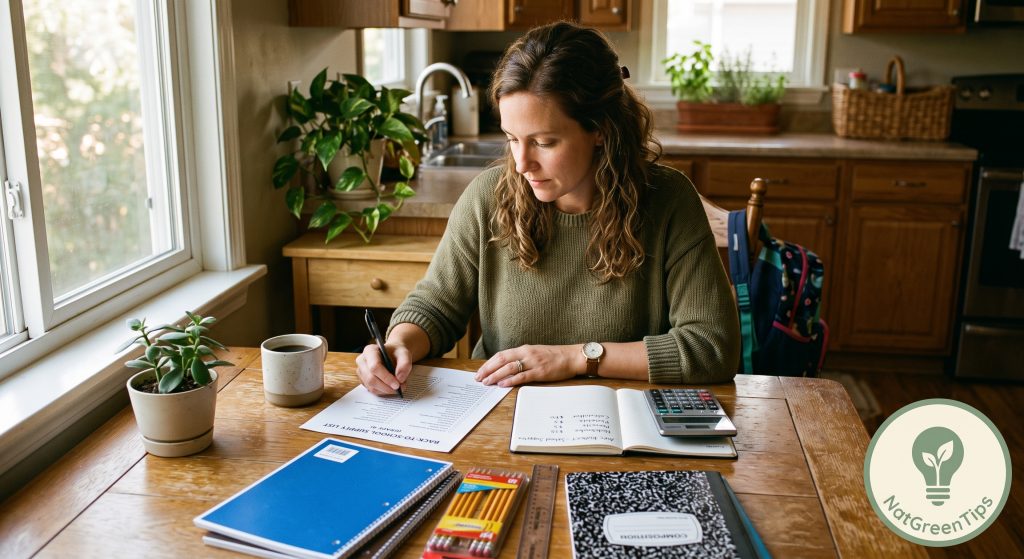
Last August I stood in the school supply aisle with my daughter’s list in one hand and my phone calculator in the other, watching the total climb past what I’d budgeted before I’d even hit the clothing section. That trip is what pushed me to build an actual system this year instead of winging it store by store, and it’s made this back-to-school season noticeably less stressful.
Quick Answer
A realistic back-to-school budget checklist starts with the school-provided supply list first, checks what you already own before buying anything, sets a firm total budget split by category (supplies, clothing, shoes, tech), and builds in a small buffer for the inevitable mid-year replacement. Sticking to this order, rather than shopping category by category as things come up, is what actually keeps the total under control.
Start with the school’s actual list, not the store display
It sounds obvious, but the trip that blew my budget last year started with me browsing the seasonal displays before I’d even opened the email from my daughter’s teacher. Store displays are designed to make everything look necessary. The actual list is usually shorter and cheaper than what the store wants you to believe you need.
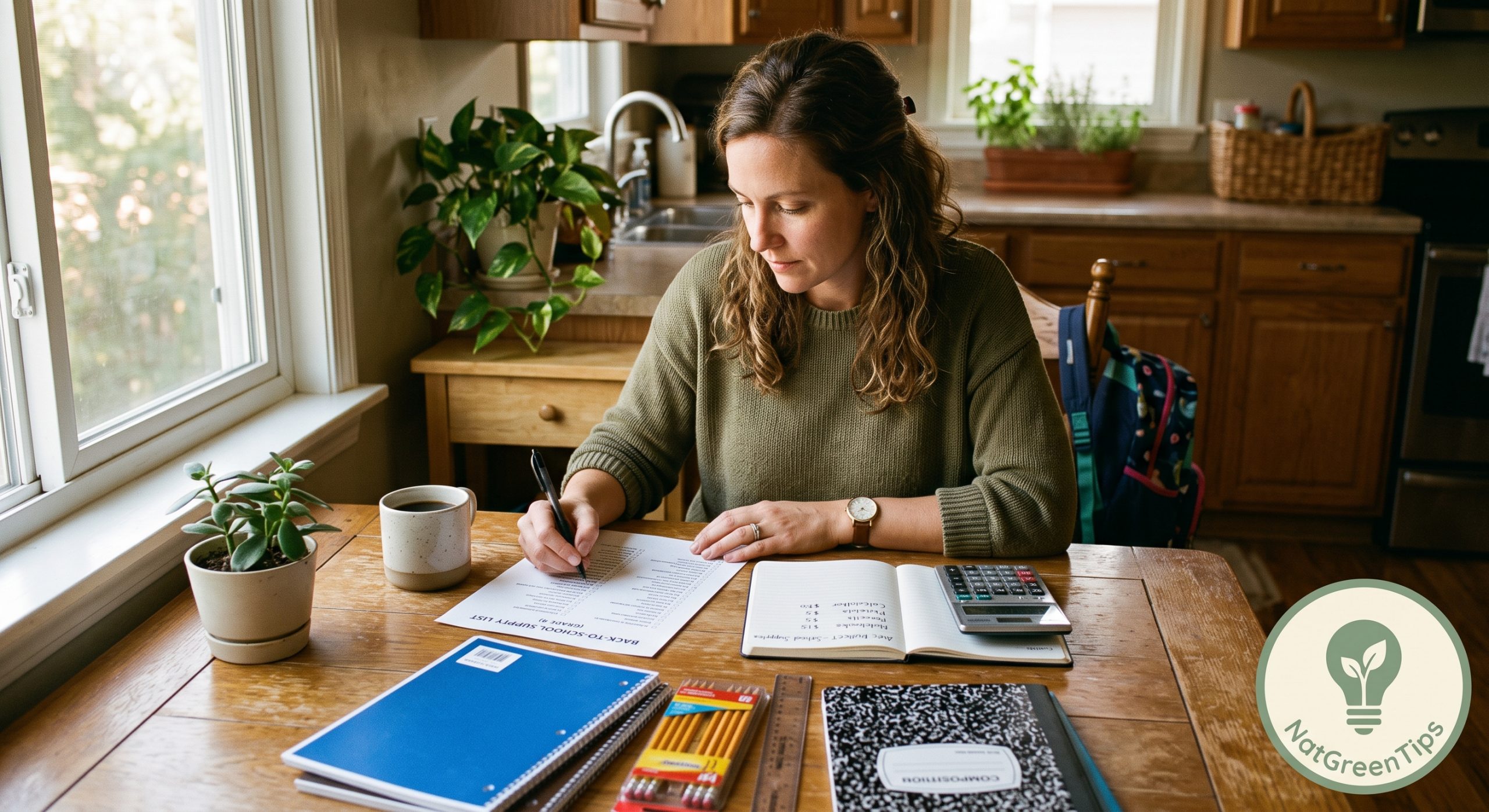
This year I printed the list, checked off exactly what’s on it, and only considered anything beyond that once the essentials were covered and I could see how much budget was left.
Do a home inventory before buying anything
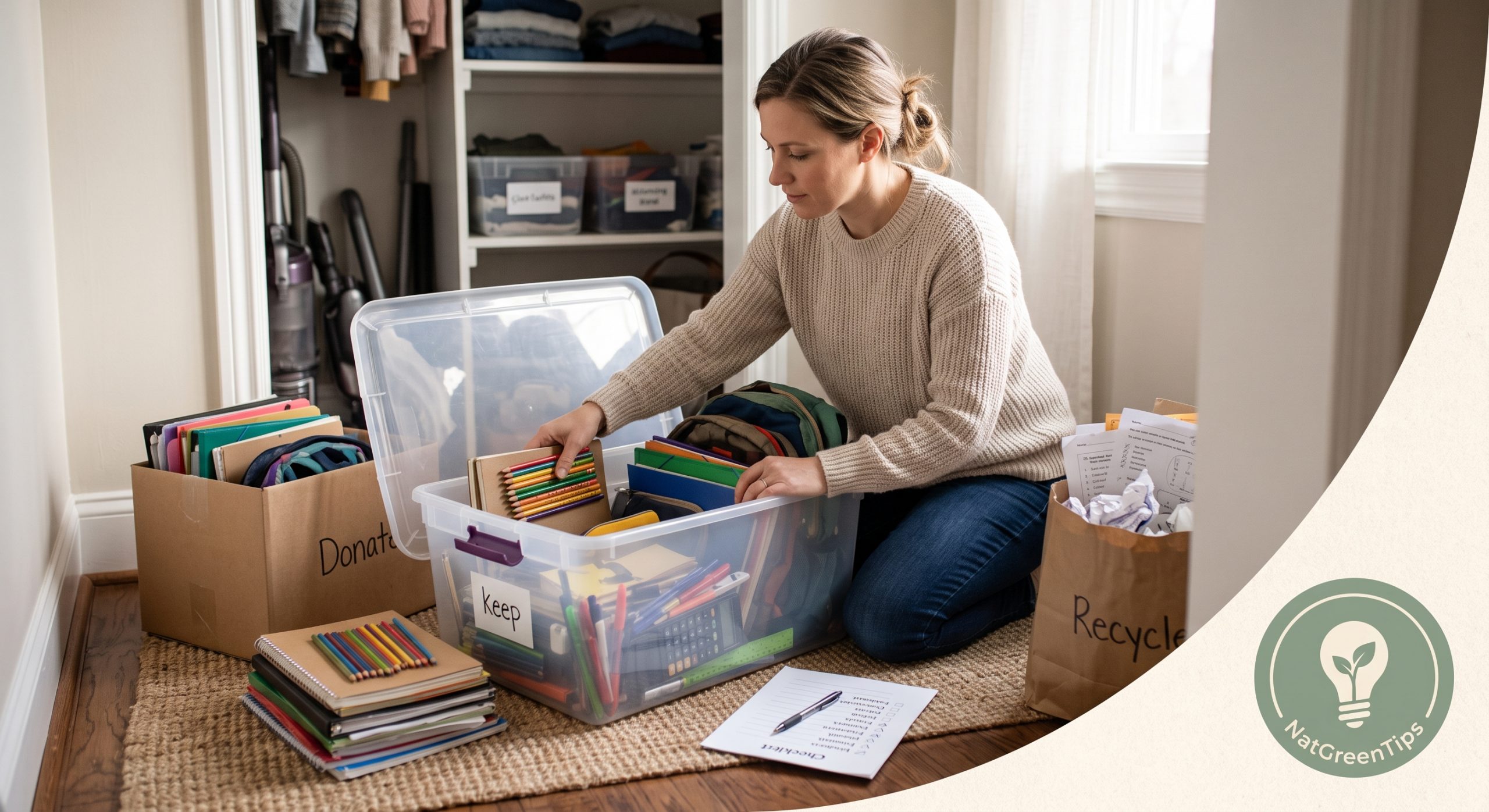
Before this year’s shopping trip, I actually went through my kids’ rooms and the supply bin in our closet first. We had two nearly-full boxes of crayons, a stack of barely-used folders, and enough pencils to get through October without buying a single one.
This step alone cut a meaningful chunk off our list. It’s easy to forget what’s already in the house when a fresh list shows up, and stores are counting on that. I go through the same audit every year now, sorting into keep, replace, and donate piles, before buying anything new.
Set category budgets, not just one total number
Having one lump budget number made it too easy to overspend early and panic later. Splitting it by category upfront meant I knew exactly how much was left for clothes once supplies were done, rather than discovering the shortfall at checkout.
- School supplies (notebooks, folders, writing tools)
- Clothing and shoes
- Backpack and lunch gear
- Tech (if applicable: calculator, laptop, etc.)
- A buffer for mid-year replacements (lost water bottles happen)
Where I actually spent more, on purpose
Not everything on my list got the cheapest option. The backpack and lunch box are things my kids use every single day for the whole year, so I spent more there for something durable, reasoning that a backpack that survives the year is cheaper than replacing a flimsy one in December. If you’re weighing options here, our non-toxic lunch box guide covers exactly what to check for.
Where I cut back was on trend items, the specific character folders and pencil cases that get replaced by next year’s trend anyway. Plain, durable versions of those cost less and hold up just as well functionally.
The mid-year buffer that saved me last time
I used to budget as if the school supplies I bought in August would simply last until June, which never actually happens. A water bottle gets left on a bus, a pencil case goes missing, a pair of shoes wears through faster than expected.
This year I set aside a small buffer specifically for these replacements, rather than treating each one as a surprise expense that derails the month’s budget. It’s a small mental shift, but it’s kept me from feeling like I’m constantly “failing” the budget every time something needs replacing. A sturdy leak-proof insulated water bottle has been one of the better buffer purchases this year, since it’s held up well enough that I haven’t needed to replace it mid-year.
The exact back-to-school budget checklist I use, start to finish
Once I’d been through a few rounds of this, I wrote the whole process down as an actual checklist instead of just carrying the steps around in my head. Having it as something I can literally check off, rather than a vague sense of “I think I did the important stuff,” is what keeps me from drifting back into shopping the display.
- Pull the school’s official supply list first, before opening any store app or flyer.
- Do the home inventory, sorting into keep, replace, and donate.
- Set category totals (supplies, clothing, backpack/lunch gear, tech, buffer) before buying a single item.
- Shop the essentials on the school list only, checking each item off as you go.
- Only after the list is fully covered, decide if anything extra is worth the remaining budget.
- Log the actual total spent per category so next year’s budget checklist starts from real numbers instead of a guess.
That last step is the one I skipped the first two years, and it’s the reason my early budgets were just guesses dressed up as plans. Now every back-to-school budget checklist I build starts with last year’s actual category totals, adjusted for anything that’s changed (a growth spurt, a new grade’s supply requirements), instead of starting from zero.
A simple way to track spending against the checklist as you shop
The checklist itself only works if you’re actually tracking against it in the moment, at checkout, not just glancing at it once before you leave the house. I keep a running tally in my phone’s notes app, one line per category, and subtract as I go. It sounds almost too simple to matter, but seeing “clothing: $42 left” in real time has stopped more than one impulse add-on than any amount of willpower alone ever did.
You don’t need a budgeting app or a spreadsheet for this to work. A sticky note in your wallet or a note on your phone, updated at each till, does the same job. The point isn’t the tool, it’s catching the moment before checkout instead of finding out at the end of the month.
What I’d tell a friend starting from scratch
Do the home inventory first, even if it feels like an extra step before the fun part of shopping. It’s the single biggest lever on the actual total, more than any coupon or sale I found this year, and it’s the first line of any back-to-school budget checklist worth following.
And resist shopping the display before you’ve checked the actual list, that one habit change is what kept this year’s trip from repeating last year’s overspend.
Frequently Asked Questions
🌿 How much should I realistically budget per kid this year?
It varies a lot by age and school requirements, but building your own category budget based on your specific school’s list will get you a far more accurate number than any generic average.
🌿 Is it worth buying supplies in bulk to save money?
Only for things you know you’ll use fully, bulk pencils or folders make sense; bulk specialty items you might not use through the whole year don’t.
🌿 What’s the biggest budget-buster people don’t expect?
Trend items and mid-year replacements, in my experience, the initial list total is usually predictable, it’s the extras that sneak the budget up.
🌿 Should I buy everything at once or spread purchases out?
I’ve found spreading it across a few weeks makes it easier to catch sales and avoid one big overwhelming spend, as long as you’re tracking the running total as you go.
🌿 Do I need a special app to build a back-to-school budget checklist?
No, a plain notes app or even a sticky note works fine. What actually matters is checking off against your school’s real list and updating your category totals as you shop, not which tool you use to do it.
Final NatGreen thoughts
A back-to-school budget checklist that actually holds up isn’t about finding the perfect coupon, it’s about checking what you already have before you shop, splitting your total by category up front, and building in room for the inevitable mid-year replacement.
Ready to try it? Do a 15-minute inventory of your kids’ supply bin tonight, before you look at this year’s list at all.