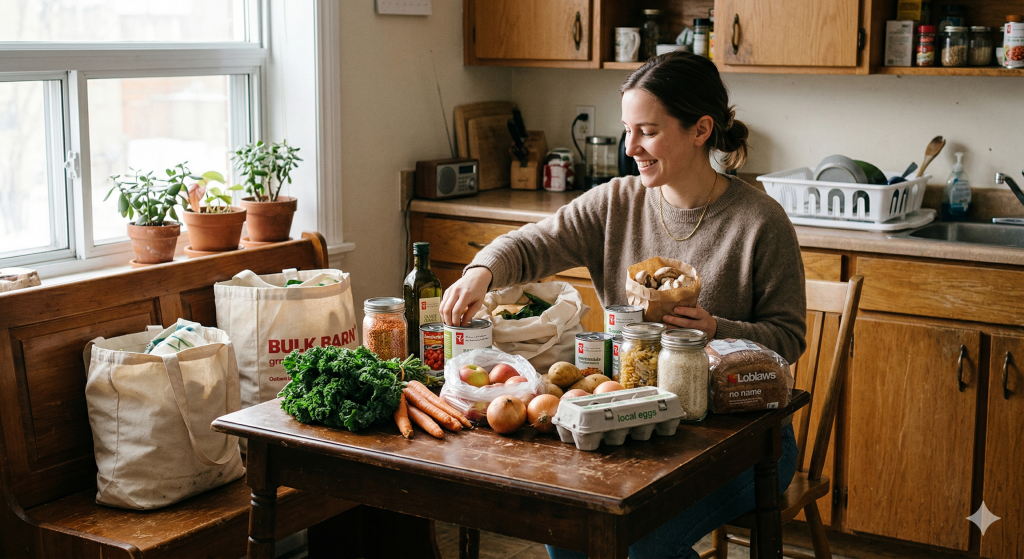
Sustainable grocery shopping does not have to mean buying expensive specialty products or completely changing how you eat. In real life, it usually means shopping more intentionally, wasting less food, and building a grocery routine that works well enough to repeat every week. That is what makes it such a useful goal if you are also trying to save money. When you buy what you will realistically use, store it properly, and stop letting impulse purchases steer the whole trip, your grocery budget starts feeling less chaotic. You do not just spend less. You waste less, stress less, and make better use of what comes into your home. If you want practical ways to make sustainable grocery shopping on a budget easier, start with habits that improve planning, storage, and consistency.
Quick Answer: How do you grocery shop sustainably on a budget?
To grocery shop sustainably on a budget, focus on buying what you will realistically use, reducing food waste, planning meals before shopping, and using reusable habits that make your routine more efficient. You do not need perfection. You need a system that helps food get used instead of forgotten.
Why this matters
A lot of grocery overspending is not caused by one big mistake. It usually comes from a mix of smaller habits: buying food without a plan, forgetting what is already at home, wasting produce before it gets used, and picking up too many items that felt like a good idea in the moment. That is why sustainable grocery shopping on a budget works so well as a goal. It helps reduce both waste and repeat spending at the same time. The point is not to shop like a perfect minimalist or only buy “green” products. The point is to make your food purchases more intentional so more of what you buy actually gets eaten.
1. Plan meals before you buy
This is one of the simplest habits that can change the entire way you shop. When you go to the store without even a rough plan, it is very easy to buy a mix of ingredients that look useful individually but do not actually fit together into meals. That is usually how food gets wasted and why grocery bills creep higher than expected. Meal planning works because it gives your shopping trip a purpose. Instead of buying based on mood, guesswork, or whatever looks good in the aisle, you are buying with a basic roadmap in mind. That does not mean you need a rigid seven-day schedule or an elaborate printable chart. In practice, even planning three or four dinners, a lunch option, and a few breakfast staples is enough to make a noticeable difference. A simple way to do it is to look at your week honestly. Ask yourself how many nights you will actually cook, which meals need to be quick, and what ingredients can be used more than once. If you know one bag of spinach can work in pasta, omelettes, and a lunch bowl, you are much more likely to use it fully. The payoff is usually immediate. You spend less because you stop buying random ingredients you never quite turn into meals. You waste less because more of what you bring home already has a job.
Best for
- households trying to cut food waste
- anyone who overspends without a list
- busy people who need simpler grocery decisions
2. Check what you already have first
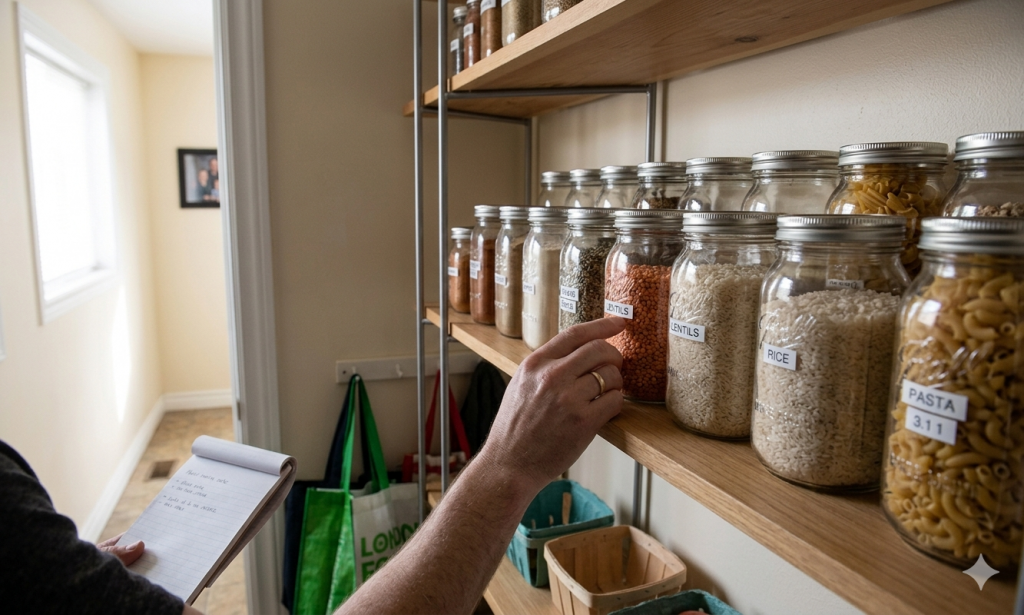
This may sound like the most obvious first step, but you’d be surprised how easy it is to miss it. It’s one of the easiest ways to stop unnecessary spending because a lot of duplicate buying happens simply because we shop from memory instead of actually checking what’s already in the fridge, freezer, or pantry. I’ve caught myself doing this more times than I’d like to admit, buying something I was sure we were out of, only to get home and find the same thing already sitting there.
That quick check changes more than you’d expect. It shows you what needs to be used, what you’re actually low on, and what you don’t need to buy again. And if I’m being honest, it also makes meals easier, because instead of starting from scratch, you start thinking, “what can I make with what’s already here?”
Keep this simply by just opening the fridge, scanning the pantry, and asking, “what needs to get used first?” That one question cuts down duplicate spending, reduces forgotten items at the back, and helps your grocery list reflect reality instead of assumption.
3. Shop with a list and stick to it
A grocery list does more than keep you organized, it quietly protects your budget from the way stores are set up to pull your attention in ten different directions. I’ve gone in for “just a few things” before and somehow walked out with a cart that made sense in the moment… but not so much when I got home and looked at the receipt.
What makes a list work is not that it’s detailed or complicated. It’s that it gives you a kind of filter. If something isn’t tied to a meal, a staple, or something you actually need, it becomes easier to pause and recognize it as an impulse instead of convincing yourself it belongs in the cart.
And if I’m being honest, it works best when it comes after a quick check of what you already have and a rough plan for meals. That way it’s not just a list of ideas, it’s grounded in what your kitchen actually needs. The goal isn’t perfect discipline, it’s just making fewer in-store decisions you end up second guessing later.
4. Buy versatile ingredients
One of the easiest ways to make sustainable grocery shopping actually work in real life is to buy ingredients that can stretch across several meals. I’ve had moments where I bought something for one specific recipe, felt good about it at the time, and then a few days later… it’s still sitting there, half-used, slowly heading for the bin.
That’s the thing with very specific ingredients. They sound great when you’re planning, but if they only fit one dish and life shifts even a little, they end up being wasted. Versatile ingredients just make your week easier. Things like rice, eggs, onions, frozen vegetables, beans, yogurt, pasta, greens, and a few proteins give you options when plans change or when you just don’t feel like cooking what you originally planned.
Flexible groceries usually mean less waste, less stress, and fewer moments of realizing you spent money on something you didn’t fully use
5. Store produce properly
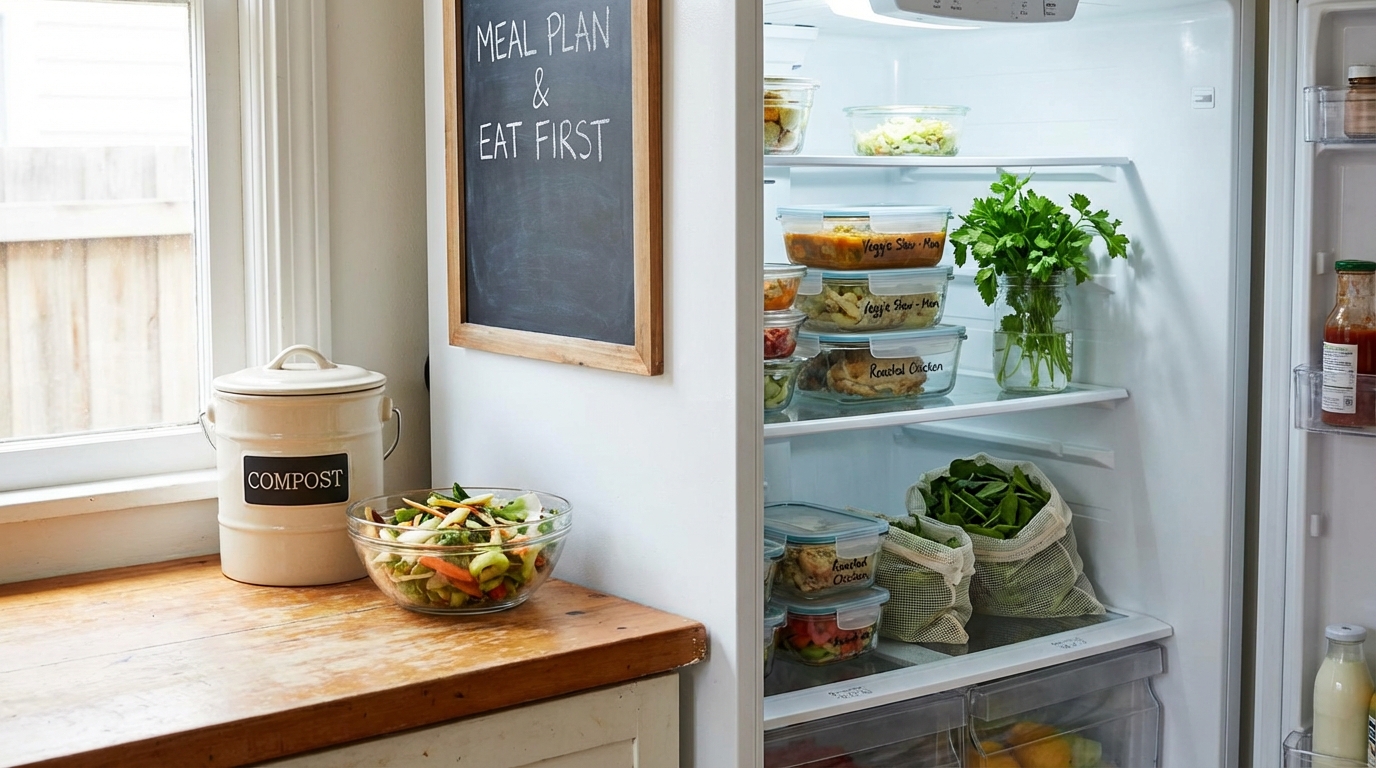
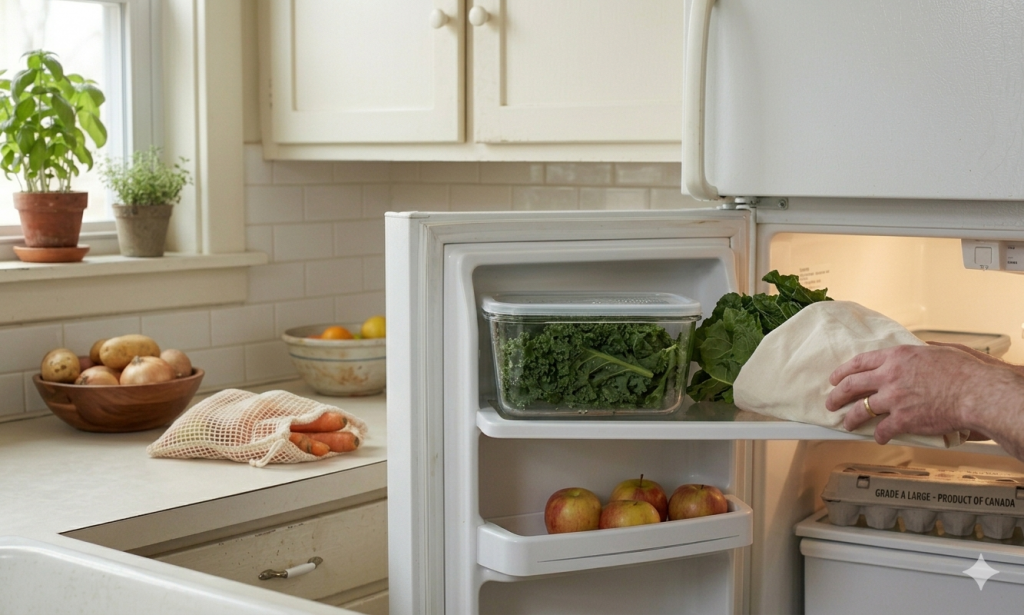
A lot of grocery waste happens after you get home. You can do a good job planning and still lose money if produce gets shoved into the wrong drawer, leftovers disappear into opaque containers, or foods that spoil quickly stay out of sight until they are too late to use. Good storage extends the usefulness of what you already bought.
It gives you more time to use produce and makes it easier to notice what should be eaten first. In practice, this does not have to be fancy. A few simple changes help a lot:
- keep high-turnover items visible
- separate produce where needed
- use containers that let you actually see leftovers
- freeze ingredients before they spoil if you know you will not use them in time
The outcome you are aiming for is simple: fewer “I forgot I had that” moments.
Easy wins
- keep high-turnover items visible
- separate produce where needed
- store leftovers in containers you can actually see
- freeze items before they spoil if you know you will not use them in time
6. Use leftovers intentionally
Leftovers only save money if they actually get eaten. That is the part people often skip. Cooking extra is useful, but it only helps if there is a plan for what happens next. Treating leftovers as part of the week instead of an afterthought makes a big difference. That could mean packing lunch for the next day, freezing extra portions, turning leftovers into another meal, or simply designating one evening as a leftovers night. What matters is that the food stays visible in your mental plan. Once leftovers become “something I might get to later,” they often stop being a savings strategy and become waste.
The result of doing this well is not just lower waste. It is fewer nights where you order something because the food you already had somehow no longer feels usable.
7. Bring reusable bags and containers where it makes sense
Reusable grocery bags are one of the easiest sustainable habits to maintain because they fit naturally into a routine once you build the habit. If local stores charge for bags, they can save a little money over time too.
The key is not buying the most aesthetic reusable bags. It is remembering to use them. Keeping them by the door, in the car, or inside another bag you always carry makes them much more practical.
Reusable produce bags or containers can help too, but the bigger win is not the accessory itself, rather it is creating a grocery routine that reduces waste without feeling like a performance and the best sustainable habits are the ones that are easy enough to keep.
Bonus Tips:
Choose habits you can repeat every week
The best grocery system is the one you can sustain. If your routine is too strict, time-consuming, or idealistic, it tends to collapse the first week life gets busy. That is why simple repeatable habits matter more than perfect ones. A modest meal plan, a quick fridge check, a grocery list, and better storage habits will usually beat an overcomplicated system you abandon after two weeks. What you are trying to build is consistency. Once the routine becomes easier, the savings and waste reduction become easier too.
Be careful with “healthy” or “eco” impulse buys
Products marketed as healthier, more natural, or more sustainable often create the feeling that buying them is automatically the better decision. Sometimes it is. A lot of the time, it is just more expensive branding. A useful question here is: would I still buy this if it were in plain packaging without the marketing language? If the answer is no, it is worth pausing. Sustainable grocery shopping on a budget works best when it is grounded in usefulness, not image. The goal is not to buy the most virtuous cart. It is to buy food you will actually use, at a cost that makes sense for your life.
FAQ
Is sustainable grocery shopping more expensive?
Not necessarily. It often becomes cheaper when you reduce food waste, avoid impulse purchases, and use what you buy more effectively.
What is the best first step for sustainable grocery shopping on a budget?
Meal planning is one of the best starting points because it reduces waste and helps you shop with more intention.
Do reusable grocery bags really make a difference?
Yes, especially if you use them consistently. They reduce bag waste and may save small amounts over time if your local stores charge for bags.
How do I waste less food after shopping?
Store food properly, plan leftovers intentionally, and keep visible track of what needs to be used first.
NatGreens’ Final thoughts
Sustainable grocery shopping on a budget is less about buying the perfect products and more about using food wisely. The more intentional your grocery routine becomes, the easier it is to lower waste and keep your spending under control. Start with a few habits that are easy to repeat, and build from there. In most households, the biggest improvements come from simple consistency, not drastic change.