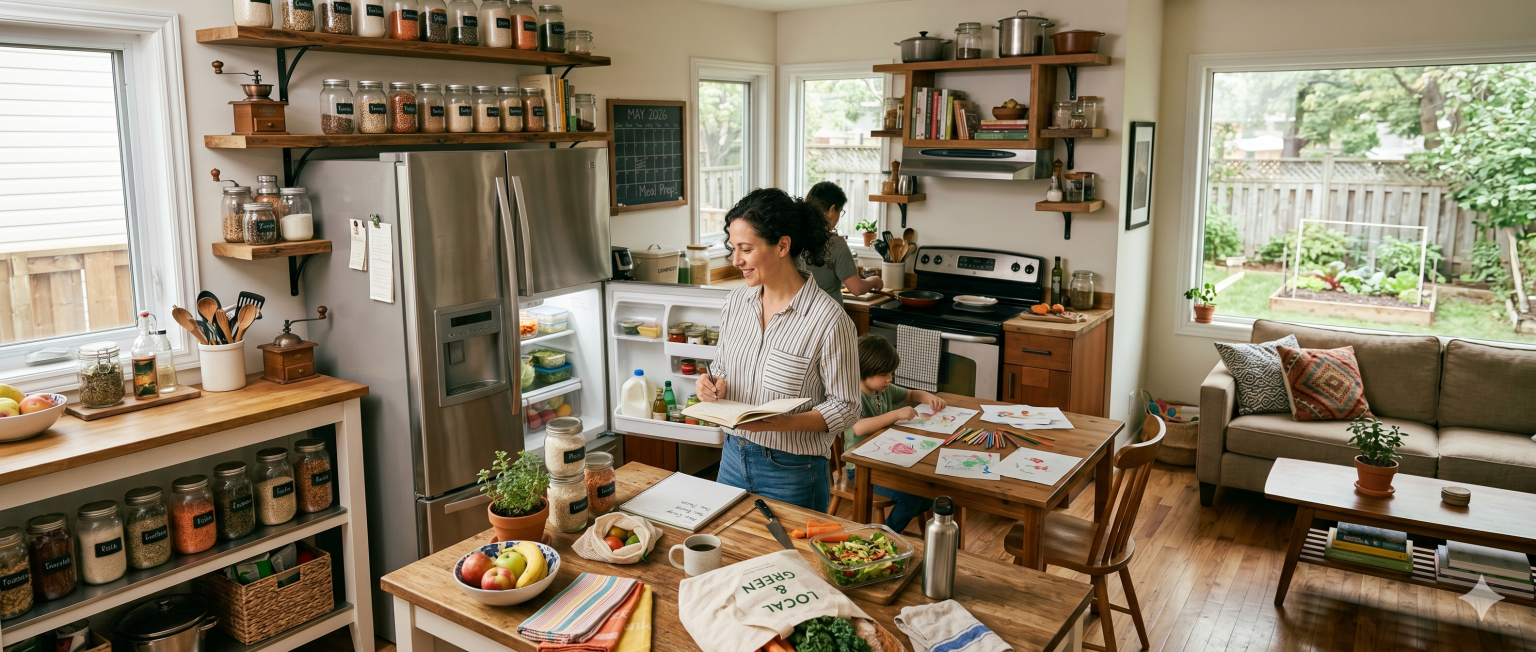
A lot of people assume sustainable living is expensive because they mostly see the polished version of it. That version usually involves aesthetic storage, premium products, and lifestyle upgrades that look impressive online but do not feel realistic for a household trying to stay on budget.
In real life, sustainable living on a budget usually looks much less dramatic. It often means wasting less food, buying fewer things you do not actually need, using more of what you already have, and building a few everyday habits that make your home run more efficiently.
That is what makes it such a practical place to start. You do not need a perfect low-waste lifestyle. You need a version of sustainable living that actually helps you spend less, waste less, and feel more in control of your routines.
Quick Answer: What does sustainable living on a budget for beginners actually look like?
Sustainable living on a budget for beginners means choosing small habits that reduce waste and repeated spending without making life harder. For most households, the best place to start is with grocery planning, reusable basics that replace recurring purchases, lower-waste home routines, and simple utility-saving habits that are easy to repeat.
You do not need perfection or expensive upgrades. You need practical changes that make your money go further while reducing everyday waste.
What sustainable living on a budget really means
A lot of beginner advice makes sustainable living sound like an identity shift. In practice, it is much more useful to think of it as a systems shift.
Instead of asking, “How do I become a perfectly sustainable person?” it helps to ask, “Where am I wasting money, food, electricity, water, or useful products right now?”
That question usually leads to much more helpful answers.
Sustainable living on a budget often means:
- buying more intentionally
- wasting less food
- replacing some repeat disposable spending with durable alternatives
- reducing small forms of household inefficiency
- choosing habits that are easy enough to maintain consistently
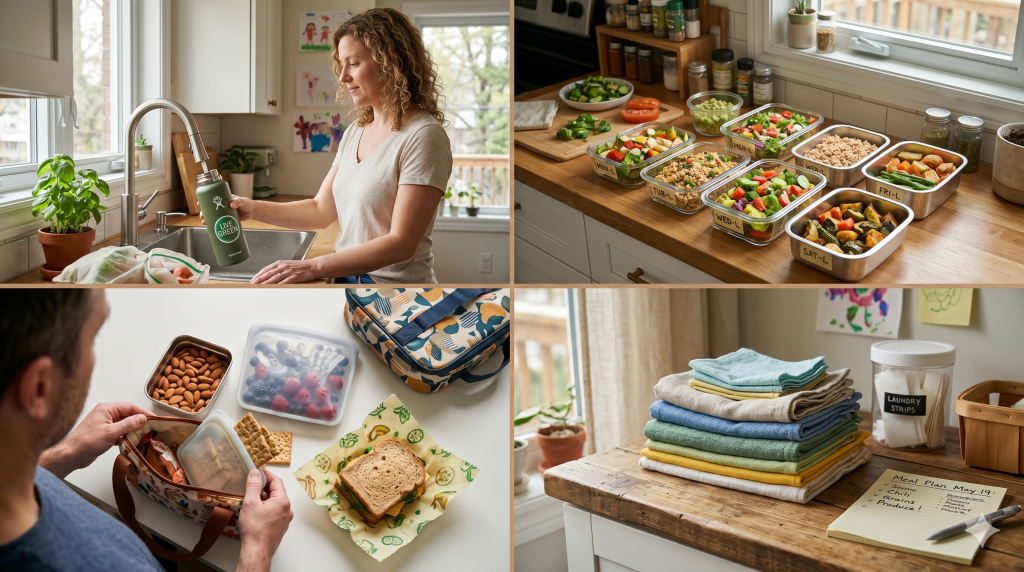
That might mean planning meals before shopping, storing leftovers more visibly, using reusable containers that make food easier to keep, air-drying some laundry, or carrying your own water and snacks when leaving the house.
The point is not to do every sustainable habit at once. The point is to reduce the everyday leaks that quietly cost money over time.
Start with the habits that reduce waste first
If you are new to this, the easiest place to begin is usually not buying new products. It is reducing the waste that is already happening in your current routine.
That waste often shows up in familiar ways:
- food gets thrown out because it was forgotten
- duplicate groceries get bought because no one checked the fridge first
- disposable products become the default for convenience
- lights and devices stay on longer than necessary
- last-minute purchases happen because nothing was planned ahead
These habits matter because they often affect both sustainability and cost at the same time. When you waste less food, you usually lower your grocery bill. When you rely less on convenience purchases, you often cut both packaging waste and repeat spending. When you use reusables that genuinely fit your routine, you buy fewer throwaway products over time.
That is why waste reduction is the best beginner starting point. It creates practical savings without requiring a full lifestyle overhaul.
Build a better grocery routine
For most households, the grocery budget is one of the clearest places where sustainable living and saving money overlap. A lot of overspending does not come from one huge mistake. It comes from smaller repeated habits: shopping without a plan, forgetting what is already at home, buying too many ingredients that do not fit together well, or letting leftovers drift into the background until they no longer feel usable.
A better grocery routine usually starts with a few simple habits:
- plan a few meals before shopping
- check the fridge, freezer, and pantry first
- choose ingredients that can work in more than one meal
- store leftovers and produce so they stay visible
- use older ingredients first instead of always reaching for the newest ones
What makes these habits powerful is not that they are impressive. It is that they reduce friction. They make it easier to use the food you already paid for and harder to waste money by accident.
If grocery waste is one of your biggest household leaks, this is one of the strongest areas to improve first. Related reading: sustainable grocery shopping on a budget and practical reusable kitchen products that actually save money.
Upgrade only the reusable products that replace repeat spending
One of the easiest ways to overspend in the name of sustainability is to buy reusable products that never become part of your real routine. A product can be eco-friendly in theory and still not be a smart budget choice for your home.
The most useful beginner rule is simple: only prioritize reusables that replace a repeated cost or solve a repeated problem.
The strongest examples are usually:
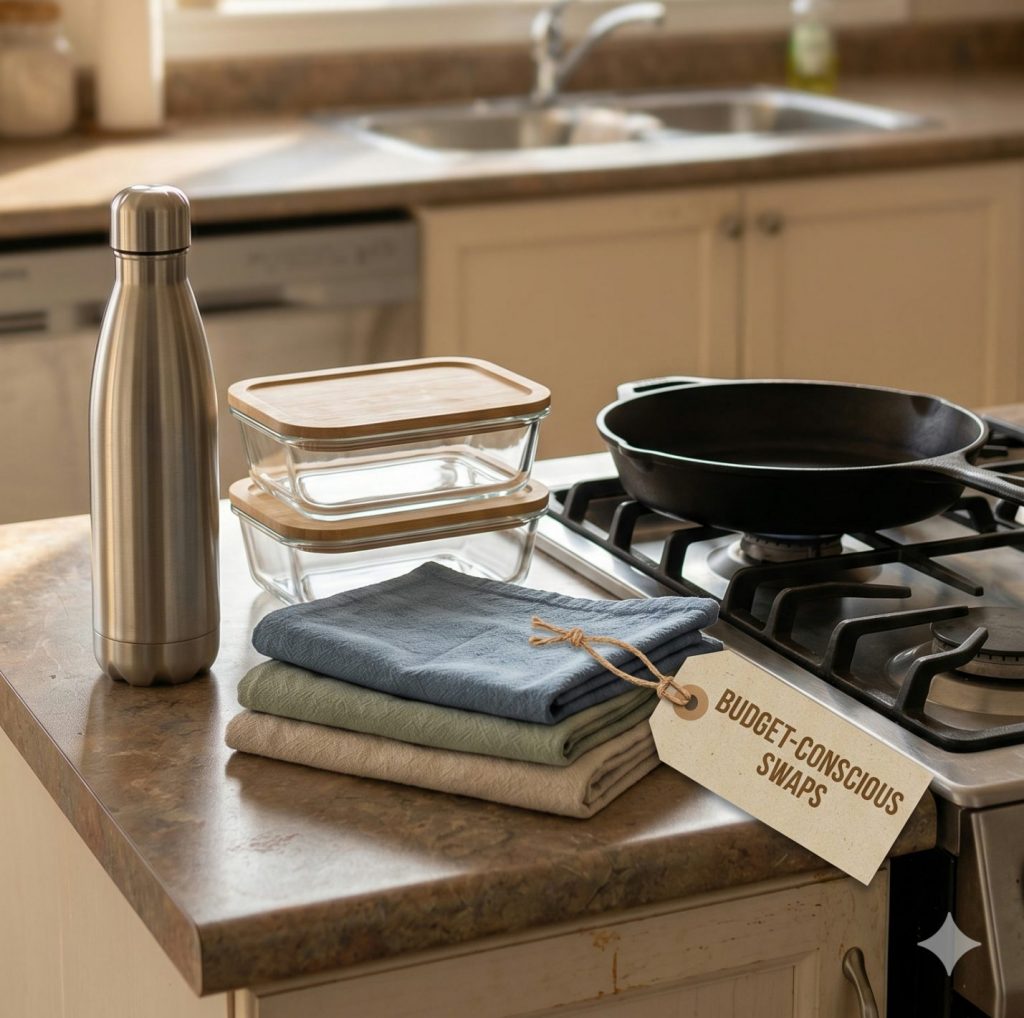
- food storage containers that help leftovers get used instead of forgotten
- washable kitchen cloths that reduce paper towel use
- reusable grocery bags that stop bag fees and disposable bag waste
- refillable water bottles that replace convenience drink purchases
- reusable lunch containers that make homemade meals easier to bring with you
What makes these products valuable is not that they look sustainable. It is that they support habits you already have. The more naturally they fit into your life, the more likely they are to save money over time.
Lower your household bills with small practical habits
A lot of green habits save money because they improve efficiency. They help you use less electricity, waste less hot water, avoid unnecessary purchases, and make more intentional use of what you already have.
That is what makes them so beginner-friendly. Many of the most useful ones are low-effort once they become normal.
Examples include:
- washing clothes in cold water when possible
- air-drying some laundry instead of drying every load
- turning off lights and devices that are not being used
- carrying water and snacks when leaving the house
- using better storage to reduce food spoilage
None of these habits need to be done perfectly to matter. Even partial consistency can reduce waste and help lower regular household costs over time.
If your goal is to make sustainable living feel practical instead of overwhelming, these kinds of habits usually give the best return for the effort.
Avoid expensive eco habits that do not fit real life
This is where many beginners lose momentum. They try to make fast progress by buying expensive products, following rigid advice, or copying systems that do not match their schedule, household, or actual priorities.
That often leads to frustration because the version of sustainable living they are attempting is too idealized to maintain.
A better filter is to ask:
1. Will this reduce waste or repeated spending in a meaningful way?
2. Is this realistic enough for me to keep doing even when life gets busy?
If the answer to one of those is no, it may not be the right beginner move right now.
Sustainable living on a budget works best when it is useful, not performative. The habits that last are usually the ones that make everyday life simpler, not more complicated.
Best beginner habits to start this week
If you want the simplest starting point, begin with habits that are easy to repeat:
1. plan a few meals before grocery shopping
2. check the fridge and pantry before buying more food
3. use a reusable water bottle more often
4. replace some paper towel use with washable cloths
5. wash more laundry in cold water
6. air-dry a portion of your clothes
7. carry simple snacks when leaving the house
What makes these habits useful is not that they are dramatic. It is that they fit into ordinary life. That makes them much more likely to last than a bigger all-at-once reset.
Best for beginners who want fast practical wins
- people trying to lower grocery waste
- households trying to reduce small repeated purchases
- anyone who wants greener habits without spending a lot upfront
FAQ
Is sustainable living more expensive at first?
It can be if you try to replace everything at once or buy reusable products without a clear payoff. In practice, sustainable living on a budget usually works best when you start with waste-reduction habits and only upgrade products that replace repeated spending.
What is the best first step for beginners?
Meal planning and checking what you already have before shopping are two of the strongest first steps because they can reduce food waste and grocery overspending almost immediately.
Do reusable products really save money?
They often do when they replace something you buy regularly and are easy enough to use consistently. The key is not novelty. It is usefulness.
How long does it take to notice savings?
Some changes can save money right away, especially grocery planning and fewer convenience purchases. Others, like lower energy use, usually become more noticeable over time.
NatGreen’s Final thoughts
Sustainable living on a budget for beginners does not need to be complicated. In most homes, the biggest wins come from simple practical changes: wasting less food, using what you already buy more effectively, avoiding repeat disposable spending, and building routines that are easy enough to keep.
Start with the habits that make life easier, not the ones that look the most impressive. That is usually where sustainable change becomes both more affordable and more realistic.